Post-Dehydration Specimen Audit (Recipe Trials 14–16)
Physical inspection and structural evaluation of the refined composite series (Recipe Trials 14, 15, and 16) were conducted on October 26. All three trials strictly incorporated the standardized Multi-Stage Curing Protocol:
[Cold Blender Pre-Mix → Stovetop Emulsification (>65°C) → Off-Flame CaCl2 Cross-Linking → 30-Min Ambient Rest and CaCl2 Mist Spray → Dehydration @ 49°C for 2 Hours; Remove from Dehydrator, Flip Polymer Over, Transfer to Metal Mesh Tray → Resume Dehydration @ 49°C for 4 to 6 Hours and Remove by 22:00 → Multi-Day Phase: Daily 2h Dehydrator Pulses @ 49°C + Intermittent Ambient Shelf Curing]
[Intermittent Multi-Day Curing → Recipe Trial 14 (Carbon-Free QC) → Soft Rubbery Sheet / Light Edge Curl / Cold Core Pockets]
[Intermittent Multi-Day Curing → Recipe Trial 15 (Wheat Flour Composite) → Semi-Rigid Pliable Sheet / Rough Surface]
[Intermittent Multi-Day Curing → Recipe Trial 16 (Thermochromic Matrix) → Smooth Rubbery Sheet / High Planar Stability]
Key Audit Observations
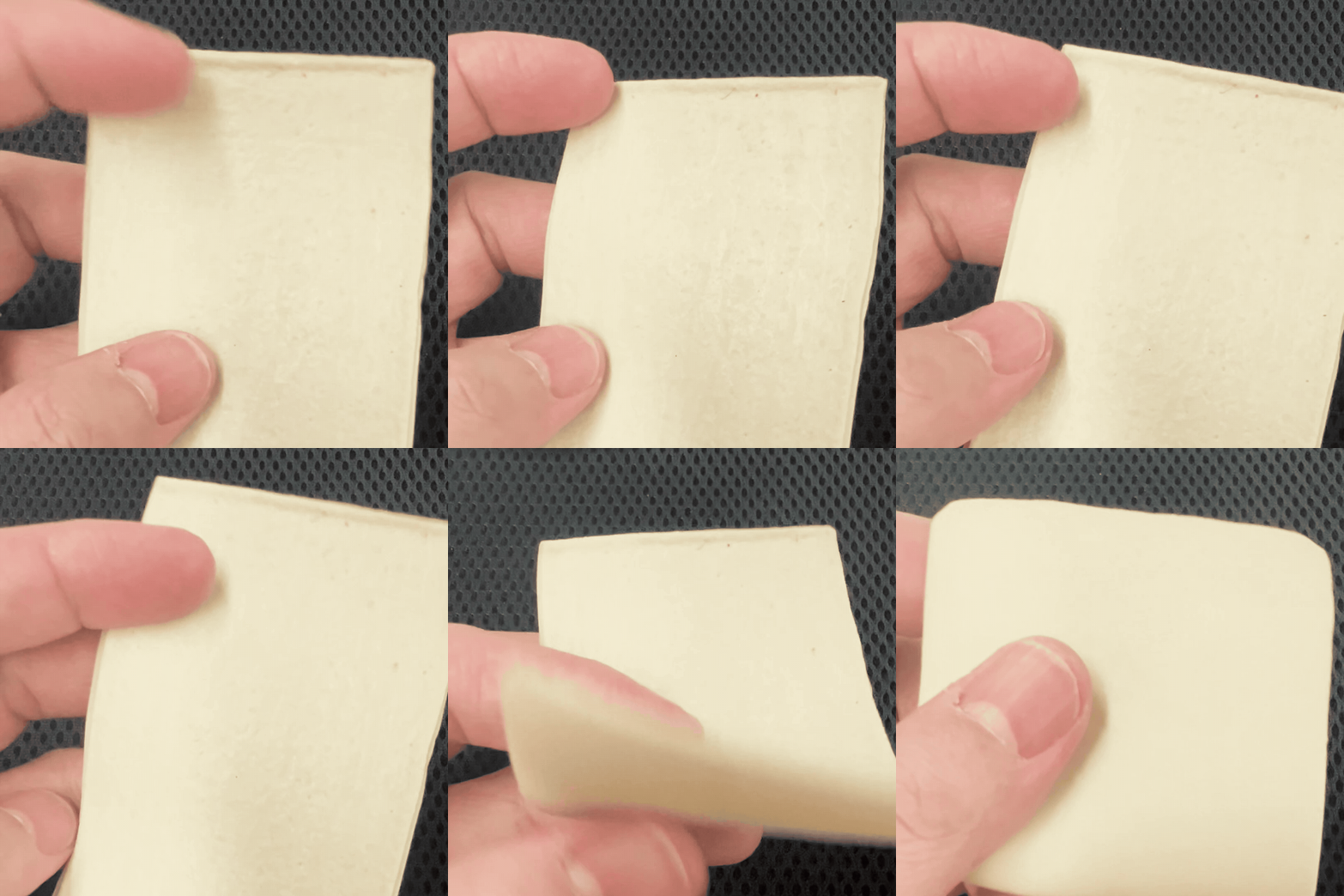
Recipe Trial 14 (Carbon-Free Hydrophobic Master QC Formula):
Visual and Tactile Surface: Cures into a thin, smooth, matte off-white sheet.
Mechanical Performance: Highly flexible and soft; easily folded, rolled, or manipulated in hand without cracking. Demonstrates strong elastomeric recovery.
Desiccation and Surface Flatness: While planar flatness across the central sheet is significantly improved over continuous 22-hour dehydrator runs, minor corner curling persists along the outer boundary. Localized core pockets retain minor moisture, feeling cold and slightly bloated to the touch under ambient Singapore humidity.
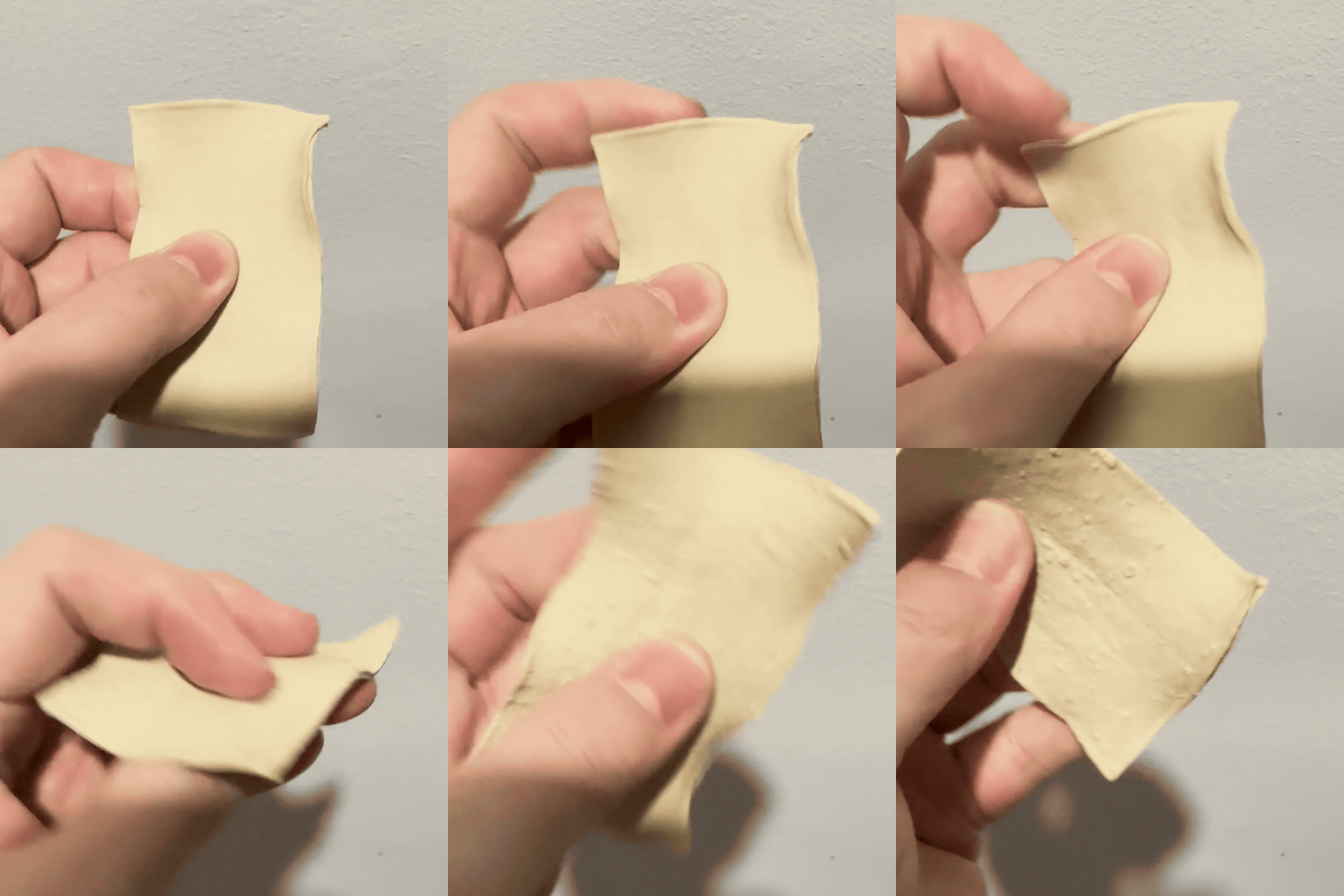
Recipe Trial 15 (Wheat Flour and Seaweed Organic Composite Sheet):
Visual and Tactile Surface: Forms a thicker, opaque cream-colored sheet with a visibly rough, matte surface texture.
Mechanical Performance: Exhibits higher structural rigidity than Trial 14. Bends under flexural force with pliable resistance, retaining a folded shape rather than instantly springing back to a flat resting state.
Desiccation and Surface Flatness: The organic starch-protein (gluten) matrix increases solid loading, resulting in localized core moisture retention that manifests as slight surface lumping across non-mesh contact areas.
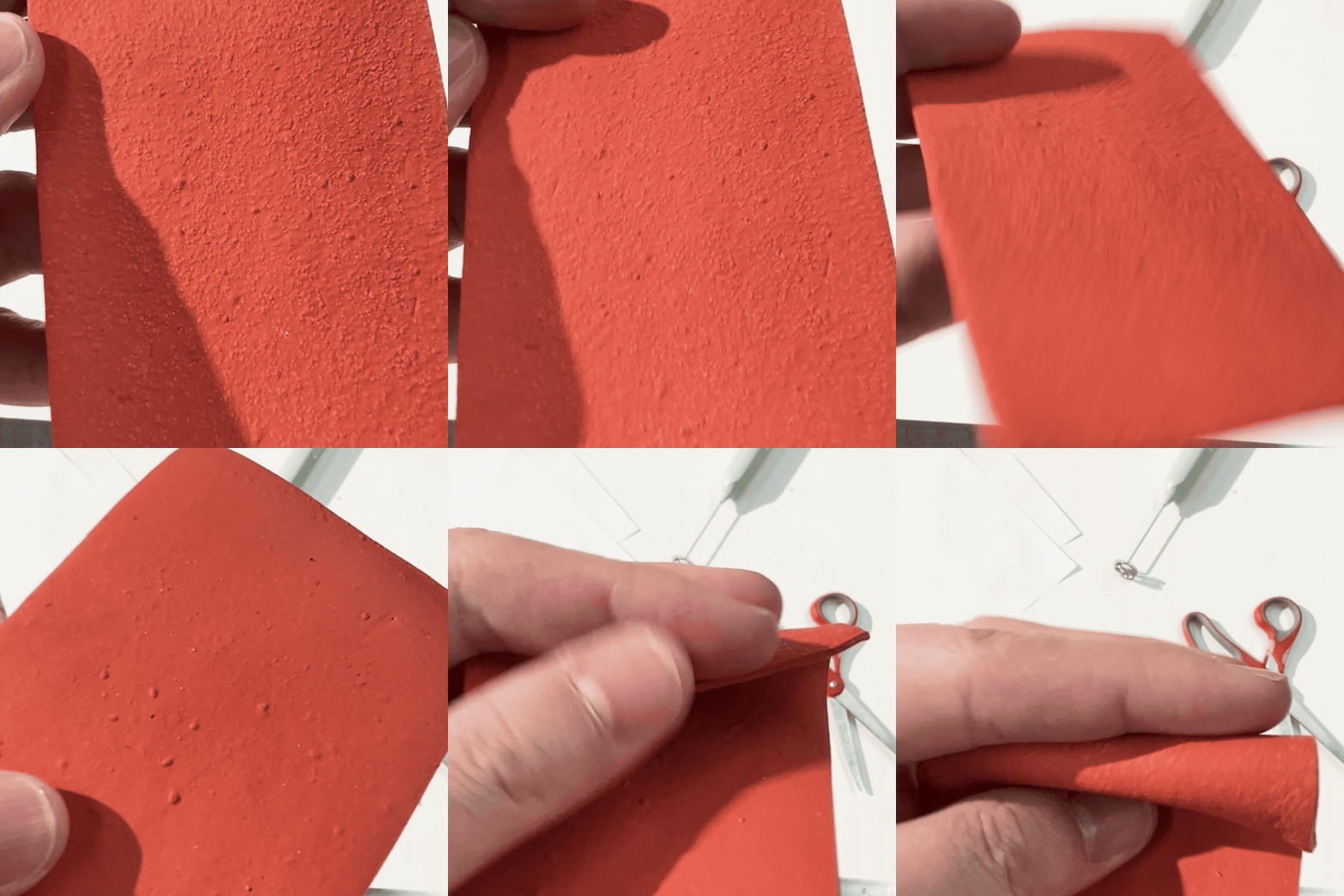
Recipe Trial 16 (Thermochromic Emulsified QC Matrix):
Visual and Tactile Surface: Cures into a smooth, rubbery, vibrant orange sheet (switching to bright yellow upon body heat contact).
Mechanical Performance: Matches the thickness of Trial 15 while retaining high elastomeric recovery. Folds cleanly and smoothly returns toward its original planar form.
Desiccation and Surface Flatness: Demonstrates the lowest core moisture retention among the three trials. Exerts pristine planar stability with minimal edge curling post-mesh inversion.
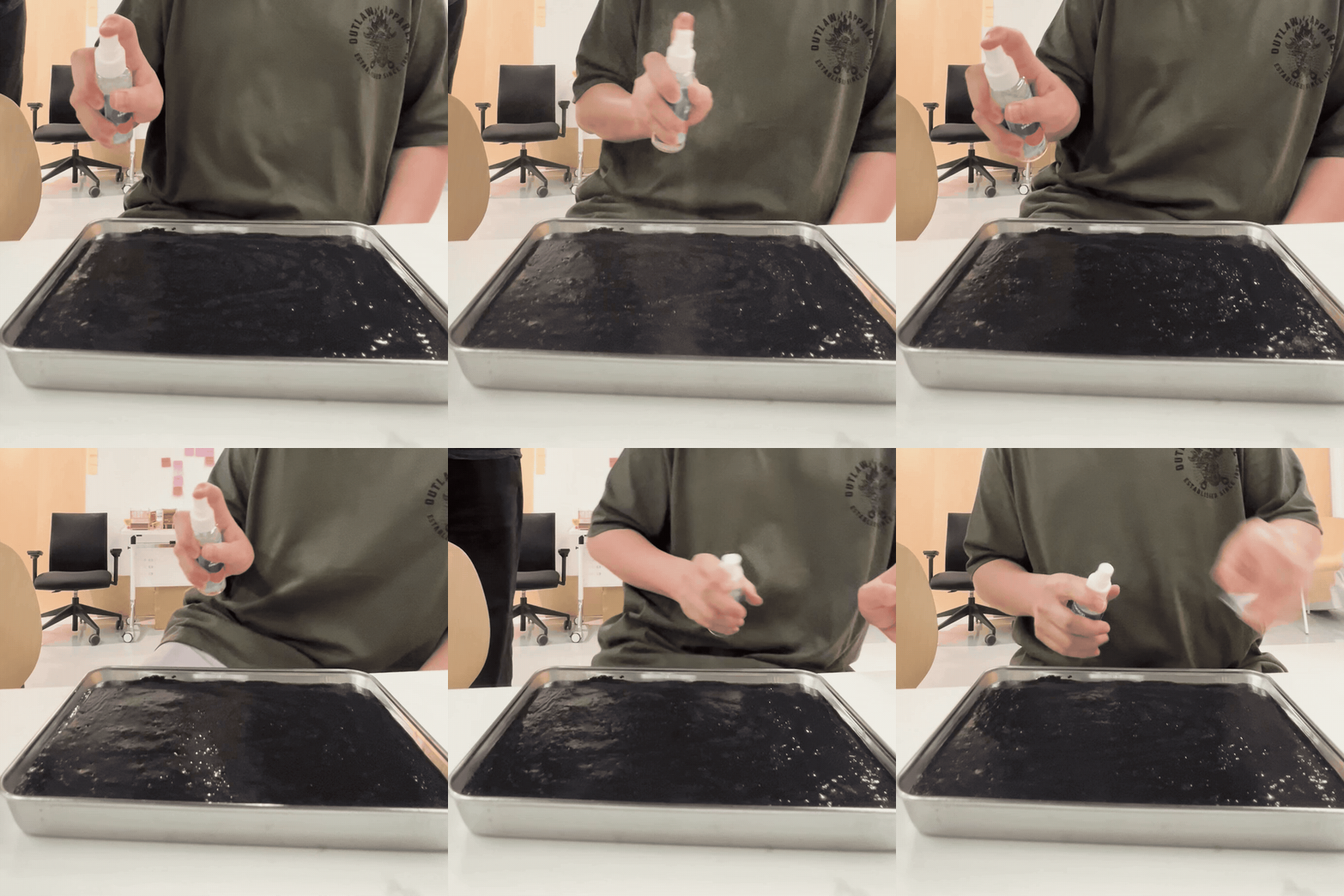
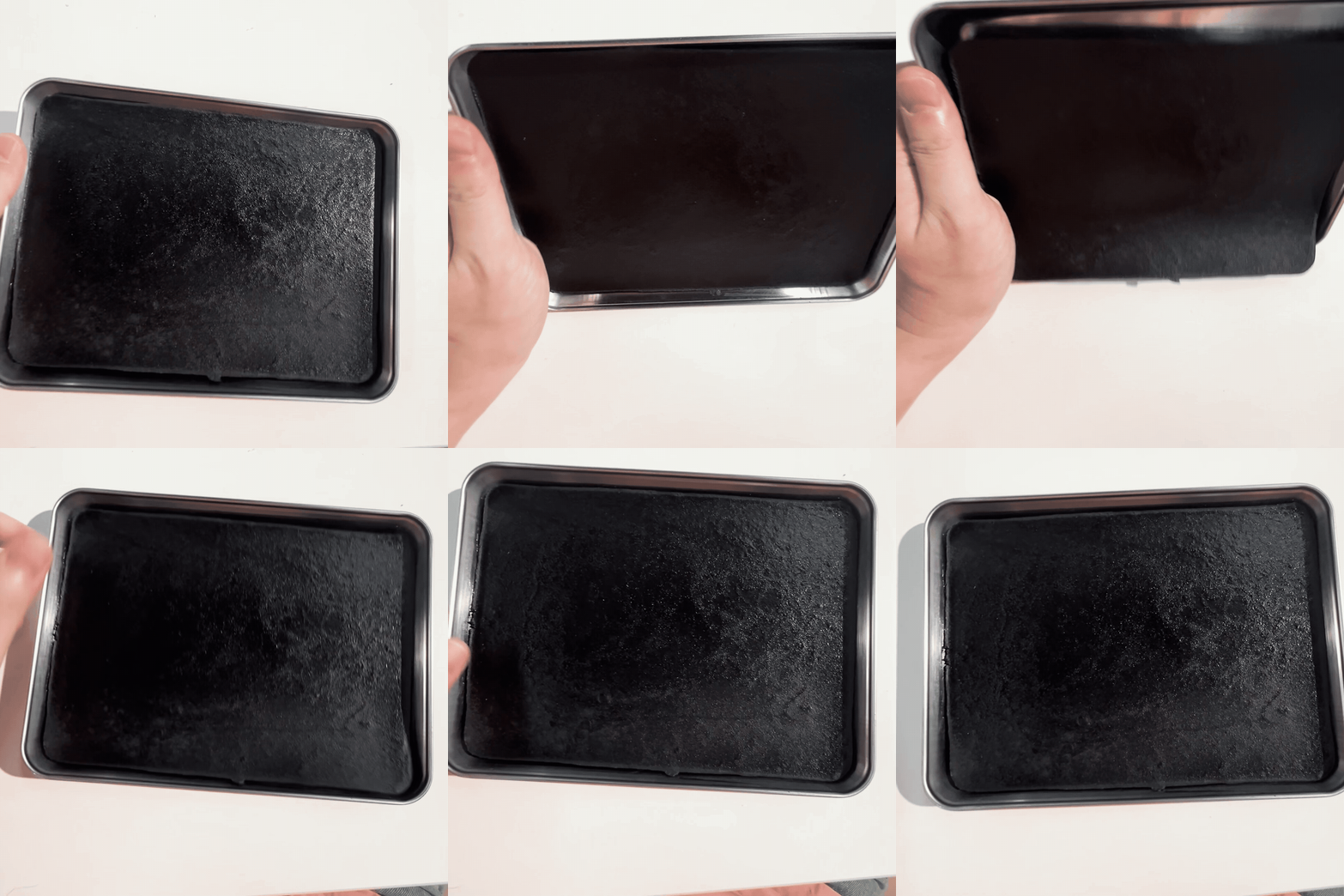
Process and Thermodynamic Analysis: Day 1 Inversion Mechanics and Multi-Day Intermittent Curing Kinetics
1. Day 1 Controlled Sequence:
- Pre-Casting Preparation: Cold Blender Pre-Mix → Stovetop Emulsification (>65°C) → 30-Minute Ambient Rest and CaCl2 Mist Spray.
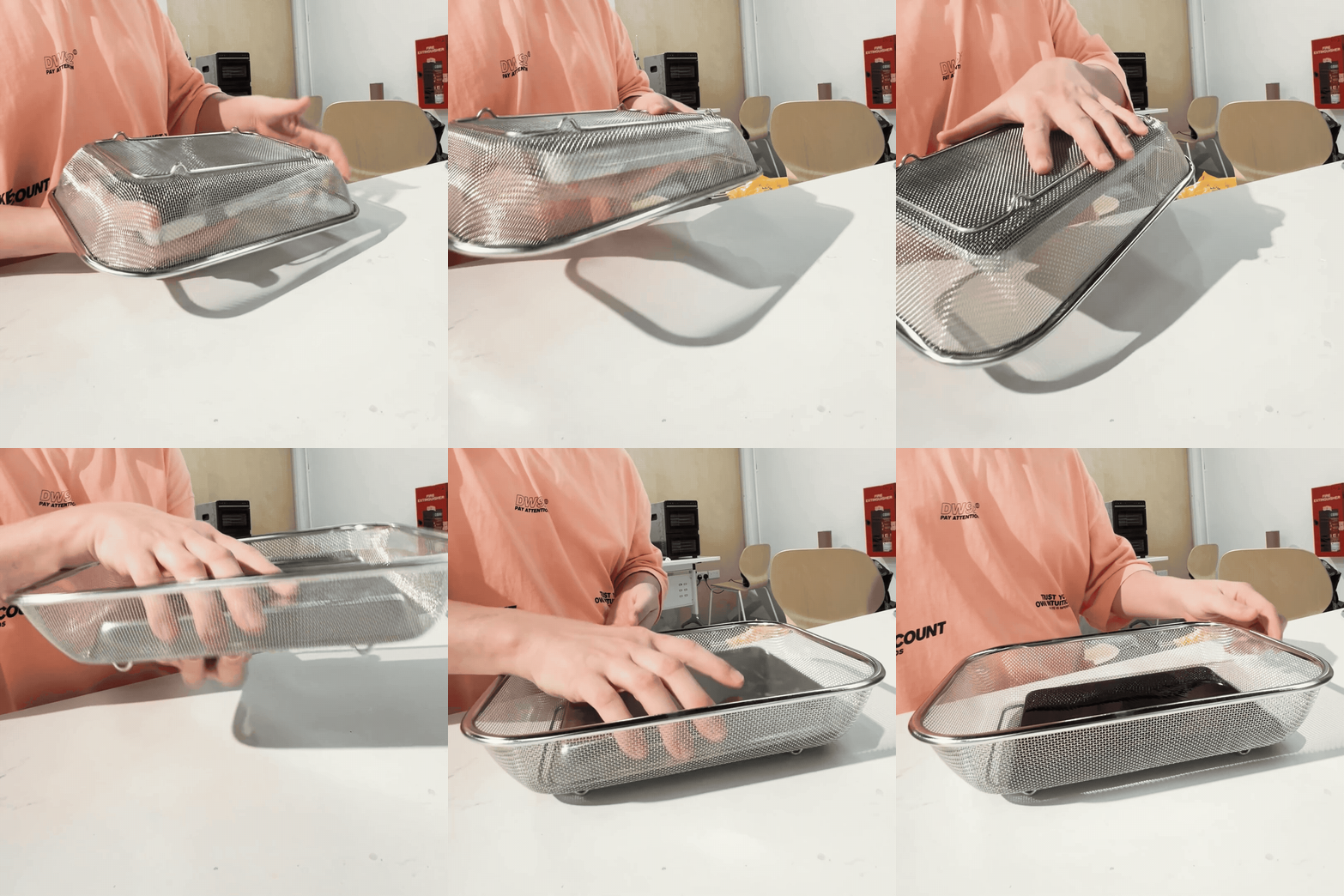
- Primary Curing and Inversion: The tray is placed into the forced-air dehydrator at 49°C for exactly 2 hours. Once the top boundary layer forms a semi-solid gel skin, the sheet is removed, gently loosened from the borders, inverted (flipped) onto a perforated metal mesh tray to expose the damp underside, and returned to the dehydrator for an additional 4 to 6 hours until studio closure at 22:00.
2. Intermittent Thermal Relaxation ("Tempering"):
By 22:00 on Day 1, the sheet is removed from the dehydrator and allowed to rest naturally on studio shelves overnight in its mesh tray to prevent excessive continuous drying. Over the subsequent two days, the polymer is re-subjected to controlled 2-hour daily dehydrator pulses at 49°C, interspersed with extended ambient shelf drying. This multi-day intermittent pulse cycle allows trapped internal moisture to migrate outward gradually, equalizing internal stress fields and eliminating perimeter contraction and violent corner curling.
3. Bio-Defense Matrix Performance:
Pausing active forced-air dehydration in Singapore's humid ambient atmosphere typically risks hygro-expansion or mold formation. However, incorporating Zinc Oxide (ZnO) for antimicrobial defense and emulsified beeswax to form a hydrophobic vapor seal allows the matrix to undergo multi-day ambient relaxation safely without structural degradation.
Contextual Research and Material Precedents
To contextualize our thermal curing kinetics and high-density filler integrations, research was expanded into polymer thermodynamics and industrial bio-composite processing:
- Intermittent Curing Thermodynamics and Stress Equalization: Continuous forced-air dehydration creates a steep moisture evaporation gradient between the outer skin and the wet core matrix. This differential shrinkage triggers severe perimeter warping and corner curling. Implementing intermittent thermal pulses interspersed with ambient shelf conditioning allows internal free water to diffuse outward gradually, equalizing internal stress fields and preserving planar sheet geometry.
- Lipid Vapor Seals and Antimicrobial Stabilization: Pausing forced-air drying in high-humidity tropical climates (such as Singapore) typically accelerates moisture absorption and mold growth. Incorporating emulsified beeswax creates a hydrophobic moisture barrier, while zinc oxide (ZnO) acts as an active antimicrobial agent, allowing hydrocolloids to undergo multi-day ambient stress relaxation without structural degradation.
- Micro-Fine Carbon Fillers and Particulate Loading Limits: Integrating micro-fine activated charcoal powder (1:1 ratio to binder) explores the boundary where solid filler volume alters polymer chain mobility. Transitioning from coarse granules to micro-fine particles eliminates surface grittiness, forming a smooth, matte-black composite sheet suitable for flexible bio-leather applications.
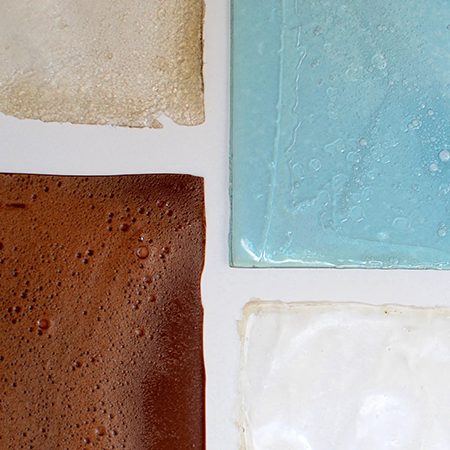
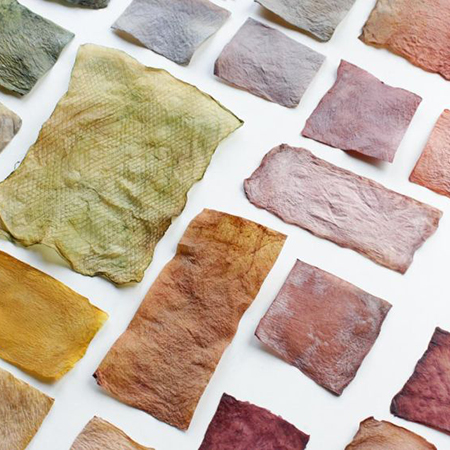
Visual Moodboard and Design Intent
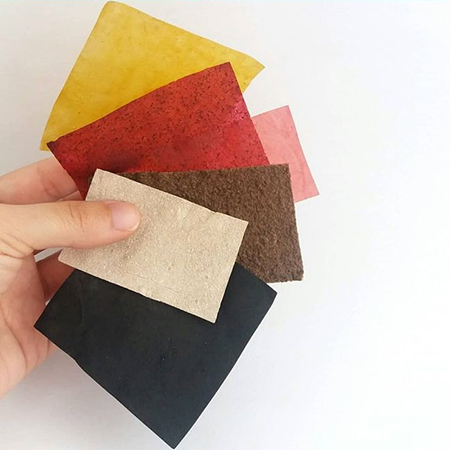
Alternative Craft and Traditional Material References
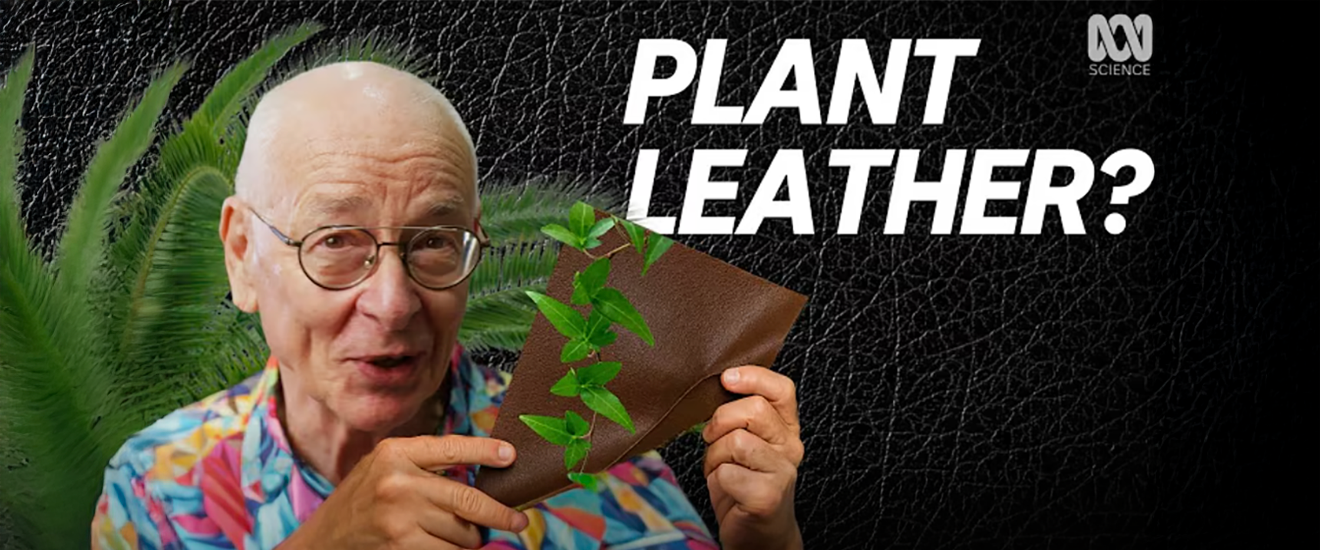
Critical Design Reflection
Reflecting on Week 11, establishing the Multi-Stage Intermittent Curing Protocol represents a major breakthrough in mastering hydrocolloid drying kinetics. Shifting away from continuous 22-hour dehydrator runs to a controlled 2-hour mesh inversion and multi-day pulse cycle successfully solved the persistent issue of perimeter warping while maintaining leather-like suppleness across all swatches.
Furthermore, Recipe Trial 17 validated the complete circularity of our carrageenan-based matrix. Demonstrating that off-cut margins and defective swatches from Trials 14, 15, and 16 can be shredded, re-hydrated and re-melted into a visually striking marbled composite confirms a zero-waste design lifecycle. This circular capability, combined with Trial 18's smooth high-density carbon integration, provides a versatile material palette as we advance toward laser-cutting cutouts and exhibition board mounting for our upcoming semester review.
Refined Recipe Formulations (Recipe Trials 17–18)
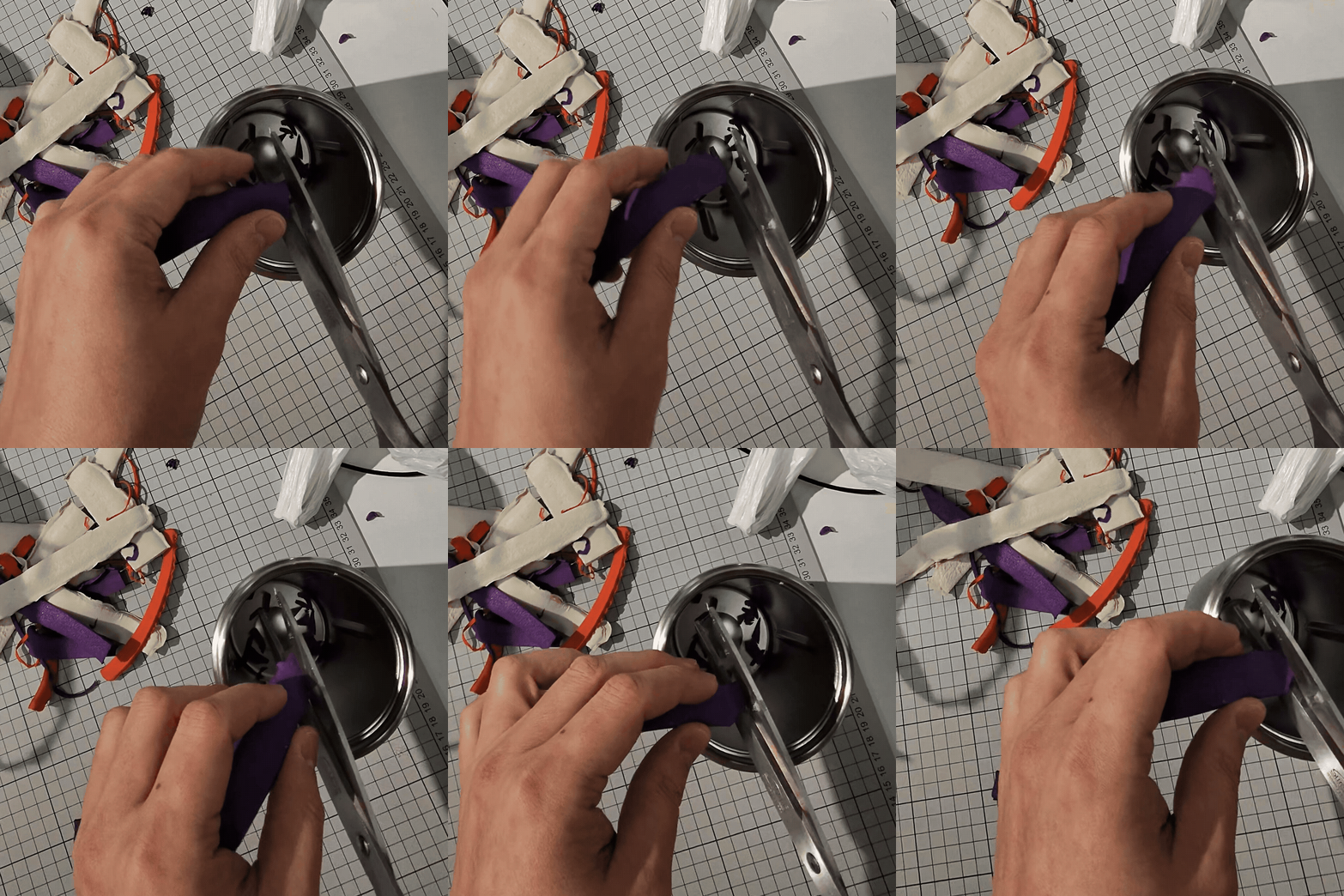
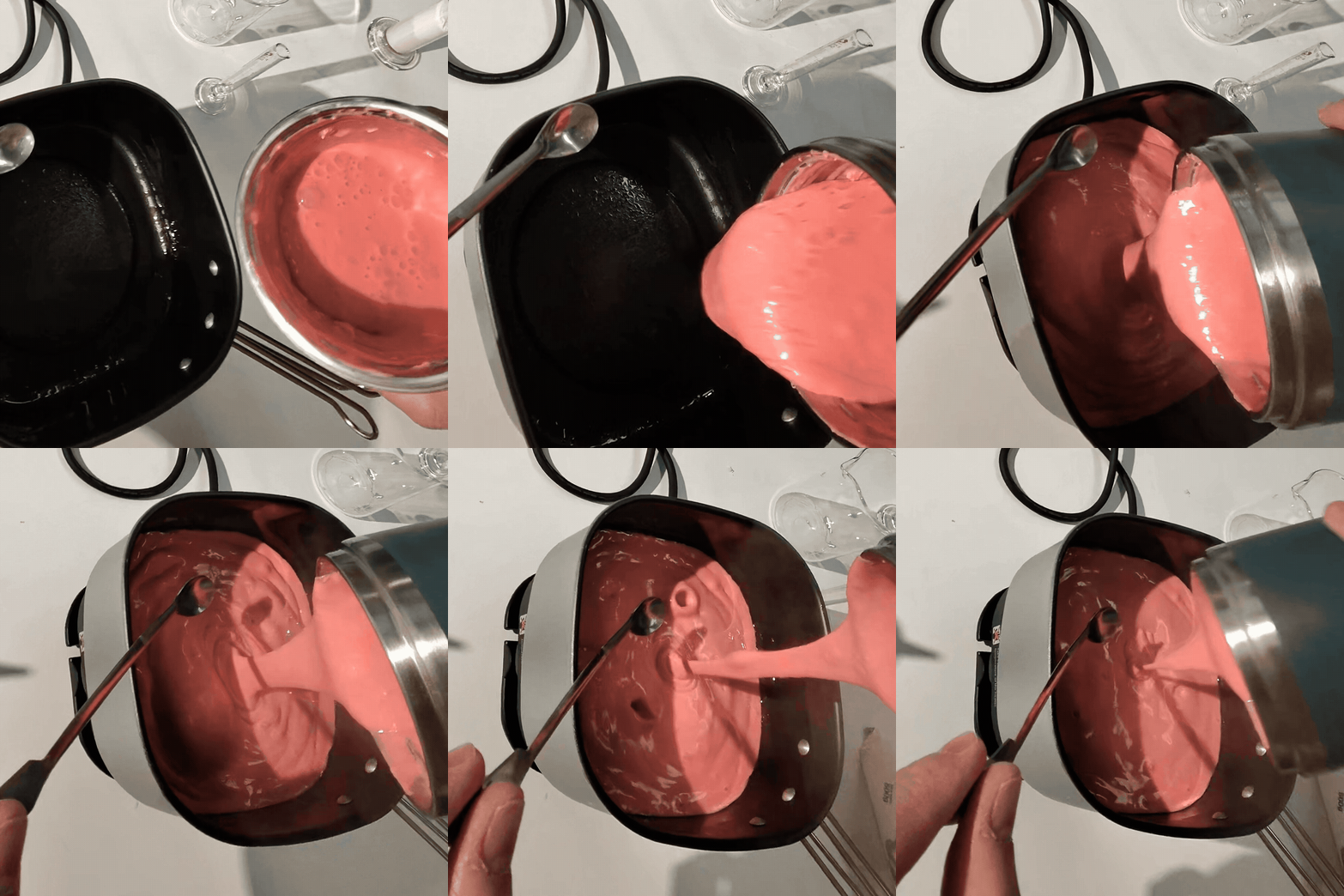
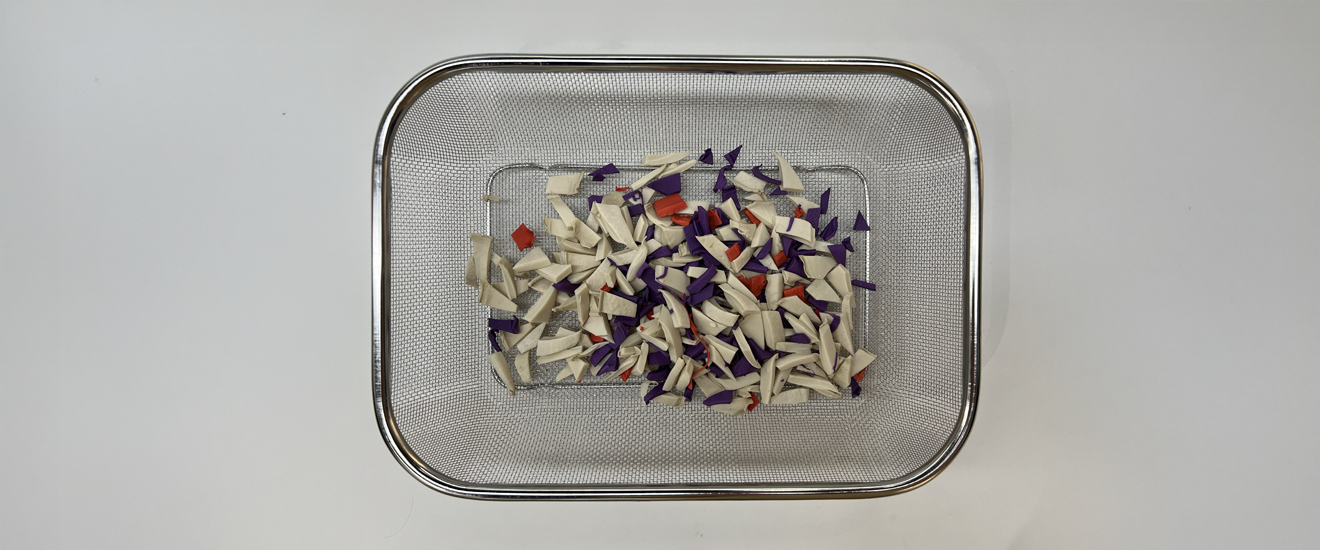
Recipe Trial 17: Recycled Multi-Specimen Marbled Composite (Circular Scraps Remelt)
Cast Date: 24 October, 2026
- Formulation Parameters: Trimmed Scraps from Trials 14, 15 and 16 (white, cream, and thermochromic orange / purple scraps), Water (300 ml — rehydration carrier), Glycerol (2 ml — flexibility restorer), Zinc Oxide Powder (0.2 g), Calcium Chloride (0.5 g dissolved separately in warm water).
- Process Observations: Trimmed scrap margins from presentation board preparation were shredded and pre-soaked in water and glycerol for 10 minutes to hydrate the hydrocolloid network. The mixture was cold-blended into a multi-colored slurry and heated past 65°C on stovetop under continuous agitation to re-gel carrageenan / starch chains. Dissolved CaCl2 was folded in off-flame
- Casting and Microstructure: Cast flat across stainless steel trays, defoamed via isopropyl alcohol spray, misted with CaCl2, rested for 30 minutes, dehydrated for 2 hours at 49°C, flipped onto a metal mesh tray for a 4–6 hour secondary run until 22:00, and completed via the multi-day intermittent pulse cycle. Cures into a fully recycled, zero-waste bioplastic sheet with high structural flexibility.

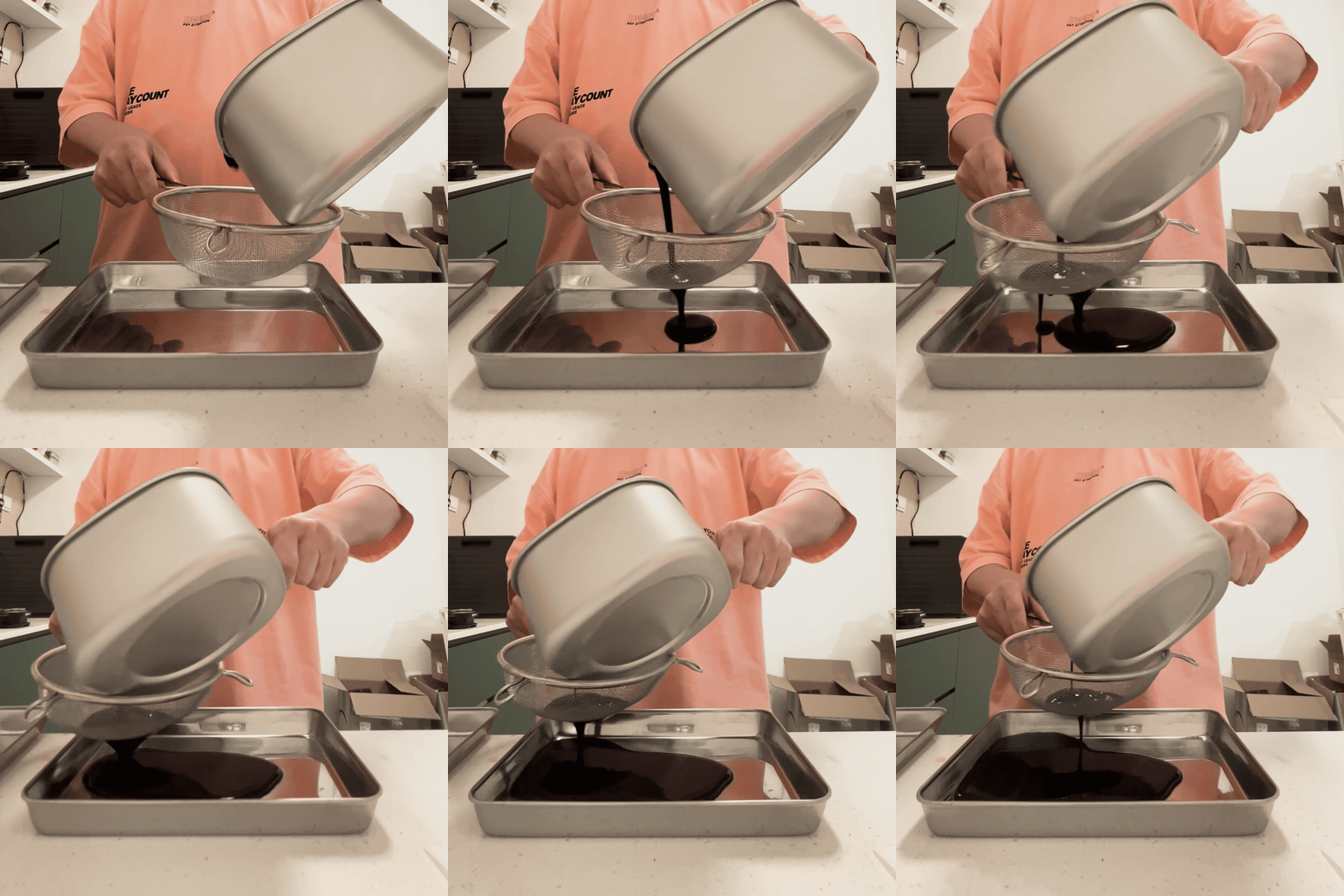
Recipe Trial 18: Fine-Grade High-Density Carbon Conductive Sheet
Cast Date: 25 October, 2026
- Formulation Parameters: Water (350 ml), Seaweed Powder (15 g), Fine-Particle Activated Charcoal Powder (15 g —extracted micro-fine grade, non-granule), Glycerol (15 ml), Zinc Oxide Powder (1.2 g), Calcium Chloride (0.5 g dissolved separately in warm water).
- Process Observations: Fine charcoal powder and seaweed binder were dry-blended before hydrating with water and glycerol. Emulsified over stovetop heat (>65°C) into a deep, glossy black fluid. Cast thinly, defoamed, misted with CaCl2, rested for 30 minutes, cured via 2-hour mesh inversion and evening drying, and stabilized via the multi-day intermittent schedule
- Casting and Microstructure: Eliminates the rough "cookies-and-cream" particulate grittiness of Trial 11, forming an ultra-smooth, matte-black flexible sheet. At a 1:1 ratio of carbon to binder (50% dry solid weight), the continuous particulate network sits above the electrical percolation threshold, establishing continuous electron pathways for functional bio-circuitry and touch-sensing applications.
Key Takeaways and Learned Insights
- Optimized Inversion and Multi-Day Thermal Pulses: Flipping the polymer onto a metal mesh tray at the 2-hour mark on Day 1 enables dual-sided airflow early. Halting drying at 22:00 followed by 2-hour daily heat pulses over subsequent days relieves internal stress gradients, preventing perimeter curling while retaining a supple, leather-like hand feel.
- Circular Zero-Waste Material Re-Melting: Dried carrageenan-starch-wax composite scraps can be fully recycled by reintroducing a controlled water carrier (300 ml) and plasticizer (2 ml), yielding sheets with high flexibility without structural degradation.
- Percolation Threshold in Micro-Fine Carbon Matrices: Utilizing fine-grade activated charcoal at a 50% dry-mass ratio establishes continuous internal electron pathways, unlocking electrical conductivity without compromising surface smoothness.
Strategic Action Plan
- Auxetic Pattern Laser-Cutting: Execute digital laser-cutting across flat sheets from Recipe Trials 16, 17, and 18 to benchmark auxetic mesh expansion and net-bag load capacities.
- Electrical Resistance and Conductivity Mapping: Audit Recipe Trial 18 across a multimeter grid to map surface resistivity (Ω / sq) and evaluate bio-sensor integration potential.
- Final Presentation Mounting: Mount standardized rectangular cutouts (85 mm x 55 mm) of Trials 14–18 onto exhibition display boards for the November Design Lab Showcase.