Overview and Procurement Timeline
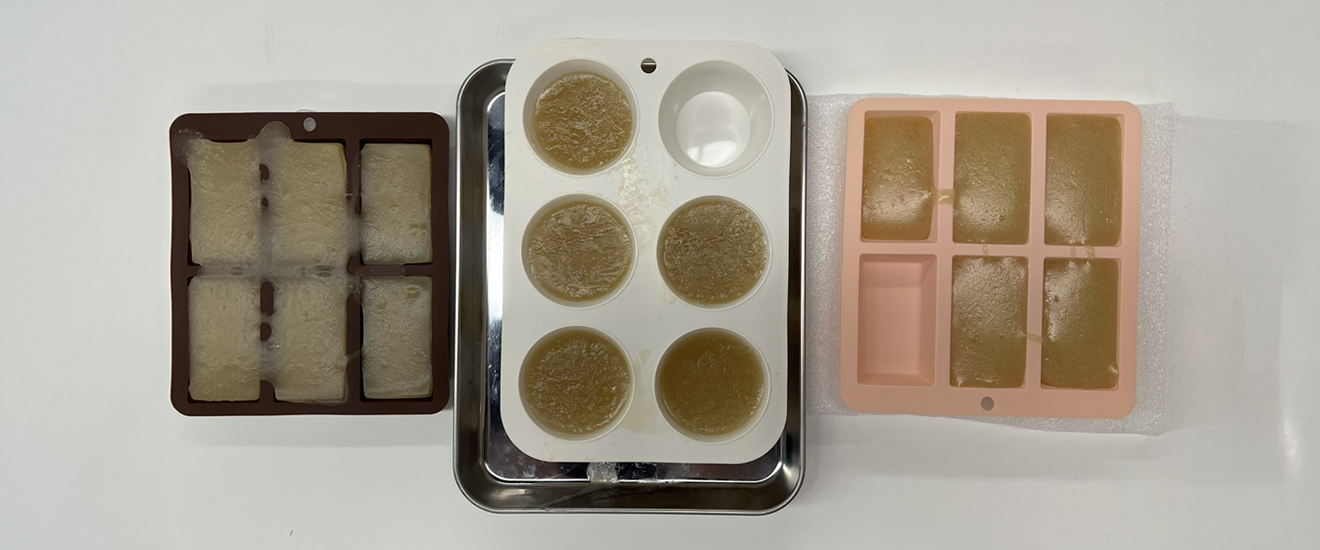
Due to ingredient shipping timelines, ordered raw materials arrived on September 17 and 18, shifting testing trials to the latter half of the week. Three distinct formulation matrices were prepared and cast using silicone moulds to benchmark viscosity, air entrapment, dissolution rates and initial set behaviors prior to forced-air dehydration testing.
Contextual Research and Material Precedents
To ground our initial biopolymer formulations (Recipe Trials 1–3) in established material science and hydrocolloid chemistry, research was conducted into natural polysaccharide and protein binder networks:
- Carrageenan Hydrocolloid Gelling Mechanics: Eucheuma cottonii seaweed is rich in kappa-carrageenan, a linear sulfated galactan that undergoes a thermoreversible sol-to-gel phase transition upon cooling. The addition of polyol plasticizers (glycerol) wedges between polysaccharide chains, disrupting tight polymer crystallization to impart elastomeric flexibility and prevent brittle cracking post-desiccation.
- Dual-Hydrocolloid Synergies (Agar-Agar and Gelatin): Combining carrageenan with secondary hydrocolloid binders alters pre-cure viscosity and network density. Agar-agar introduces galactose-based double-helical structures that increase gel durometer and thermal stability, whereas gelatin provides polypeptide chains that rapidly pre-dissolve in room-temperature water, forming a high-viscosity adhesive syrup that minimizes air entrapment during casting.
- Ionic Surface Cross-Linking and Thermoreversibility: Introducing divalent calcium ions (Ca2+ from CaCl2) induces rapid ionic cross-linking along carrageenan's sulfate ester groups. This chemical reaction explains the instant cold-water coagulation observed during vessel cleaning in Trial 1, demonstrating the rapid gelation kinetics of un-plasticized hydrocolloids.
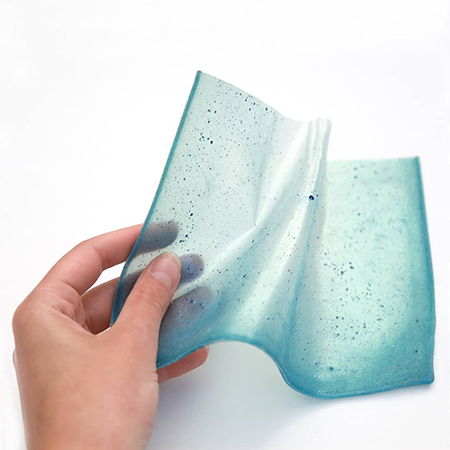
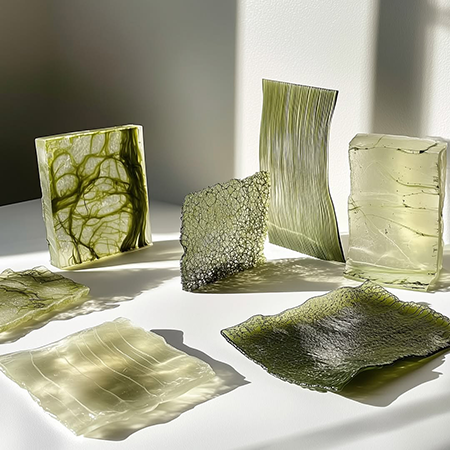
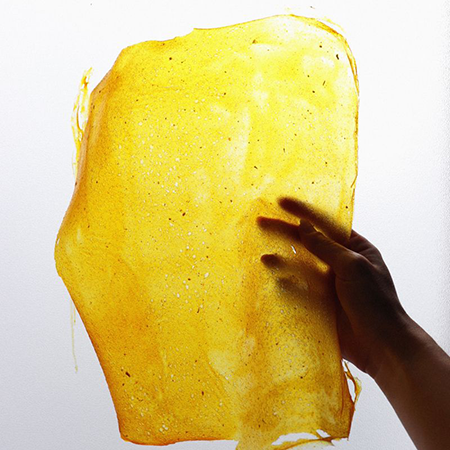
Visual Moodboard and Design Intent
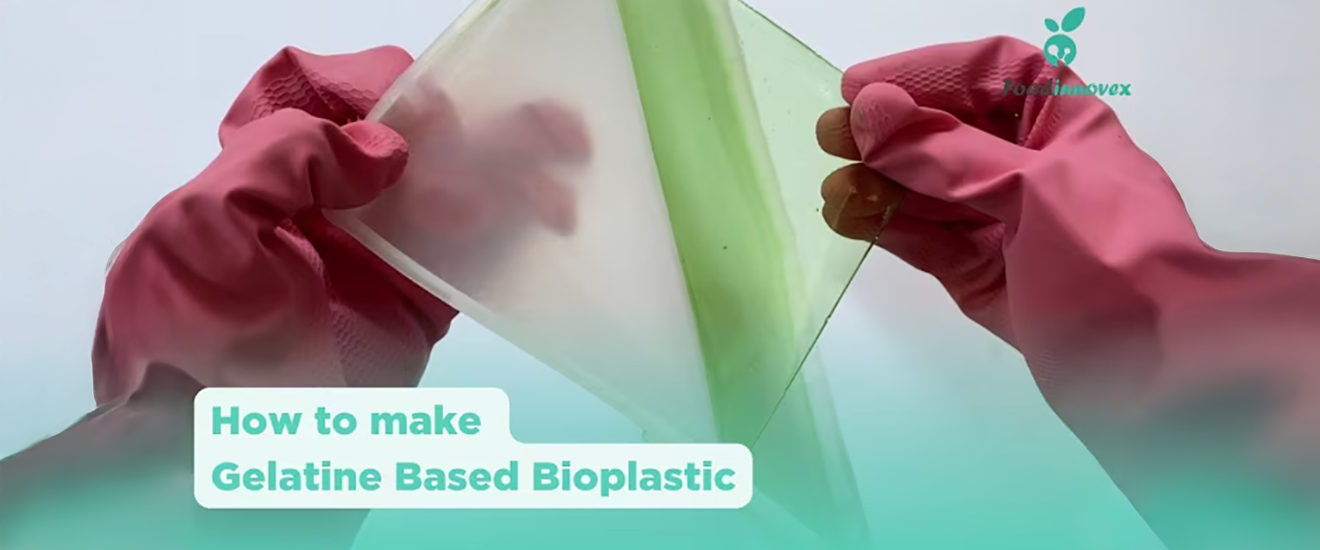
Alternative Craft and Traditional Material References
Critical Design Reflection
Reflecting on Week 5, initiating our first experimental series (Recipe Trials 1–3) marked the practical starting point of our biopolymer recipe exploration following ingredient procurement. Navigating raw material dissolution and casting dynamics immediately revealed that pre-cure fluid viscosity directly dictates final specimen quality: low-viscosity slurries (Trial 1) trap extensive micro-bubbles during manual pouring, whereas high-viscosity gelatin-seaweed blends (Trial 3) self-seal air pockets and set smoothly.
Furthermore, the accidental cold-water coagulation incident in Trial 1 provided a vital physical diagnostic, highlighting how rapidly thermal shock triggers sol-to-gel phase transition in carrageenan systems. Moving forward from these baseline binder trials, our priority shifts toward evaluating how these three distinct matrices handle machine dehydration, while preparing to integrate structural mineral fillers (CaCO3, activated charcoal, and salts) to enhance density and functional performance.
Recipe Trial 1: Pure Seaweed Bio-Plastic Matrix (Calcium Chloride Cross-Linked)
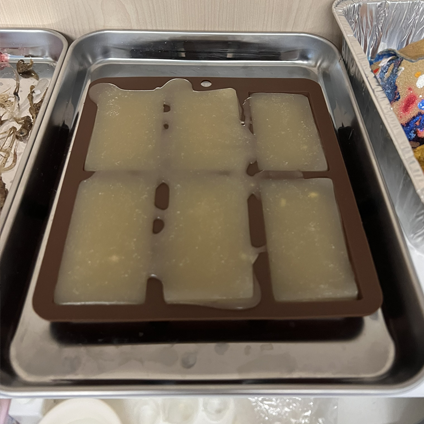
Cast Date: 18 September, 2026 | Mould: Brown Silicone Rectangular Tray
- Formulation Parameters: Water (400 ml), Eucheuma Cottonii Seaweed Powder (20 g), Glycerol (20 g), Calcium Chloride (1–2 g), Beeswax (1 g).
- Process Observations: The mixture exhibited a low-viscosity, porridge-like consistency during initial heating. Powder dissolution required extended continuous agitation under elevated heat. Upon casting into the brown mould, significant micro-bubble entrapment was observed throughout the volume.
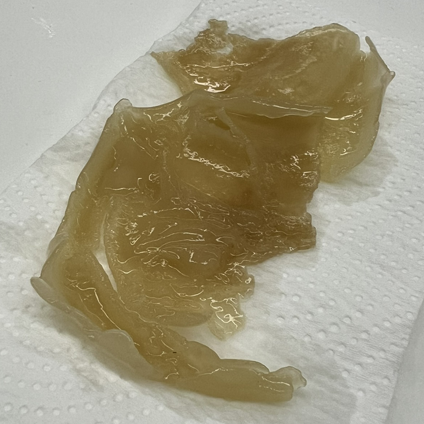
- Coagulation Incident and Baseline Sample: During vessel cleaning under cold tap water, residual hot mixture instantly coagulated into a glossy, gelatinous, highly elastic film. Samples were blotted dry and stored for tactile analysis on September 21.

Recipe Trial 2: Hybrid Seaweed and Agar Biopolymer
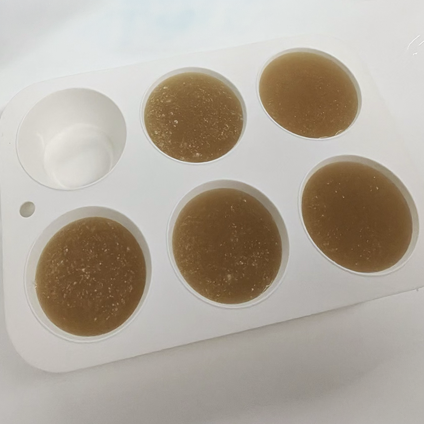
Cast Date: 19 Septembe, 2026 | Mould: White Silicone Circular Cavity Tray
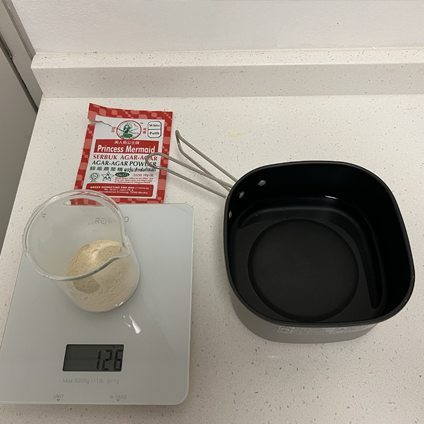
- Formulation Parameters: Water (400 ml), Agar-Agar Powder (10 g), Eucheuma Cottonii Seaweed Powder (10 g), Glycerol (20 g), Beeswax (1 g).
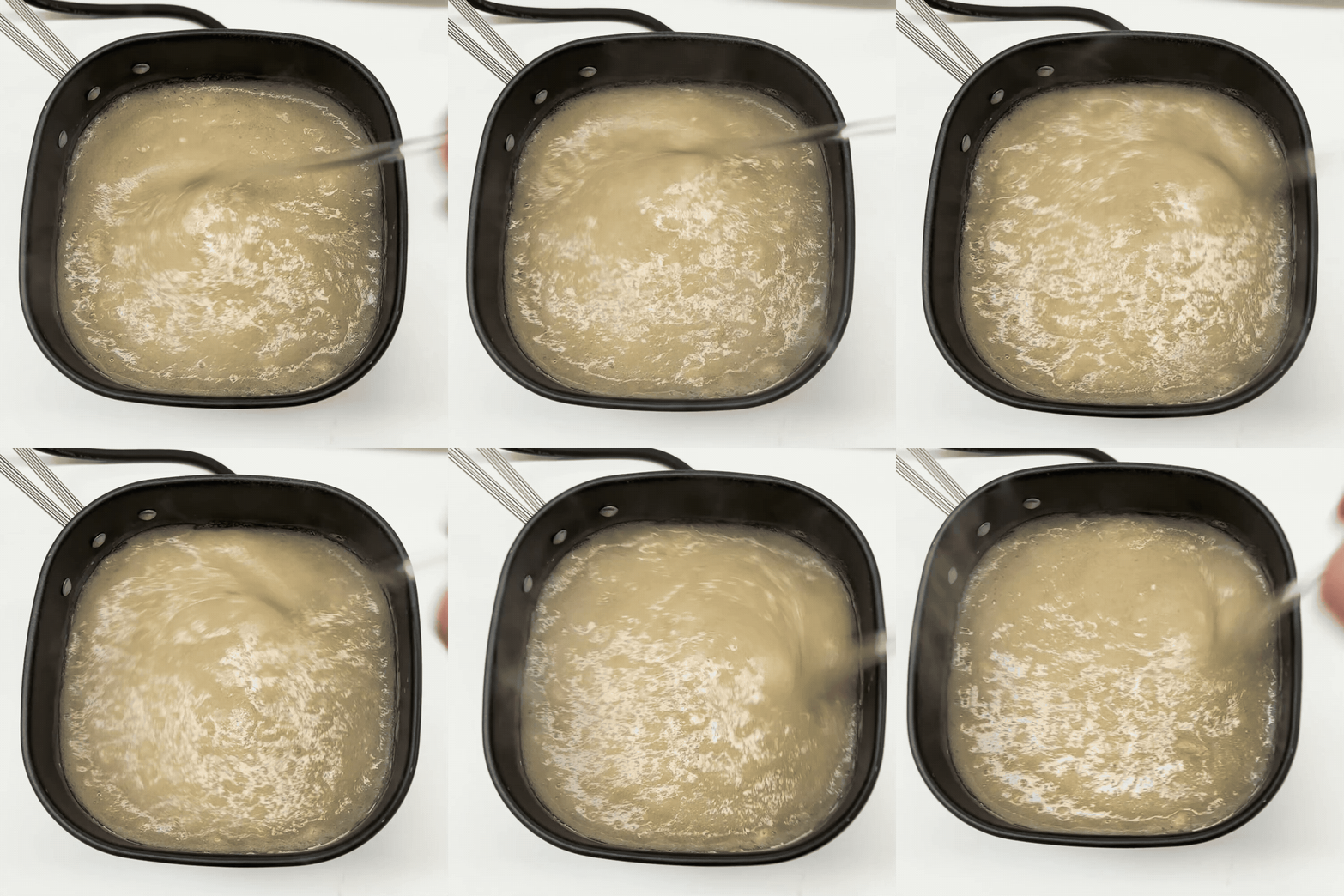
- Process Observations: The dual-hydrocolloid blend dissolved rapidly relative to Recipe 1, yielding a silky, stew-like fluid consistency near 95 °C.
- Casting and Microstructure: Surface froth was skimmed prior to casting; however, localized air pockets remained trapped within individual circular cavities due to manual pour speed. Overall surface finish appeared smoother than Trial 1.

Recipe Trial 3: Seaweed and Gelatin High-Density Biopolymer
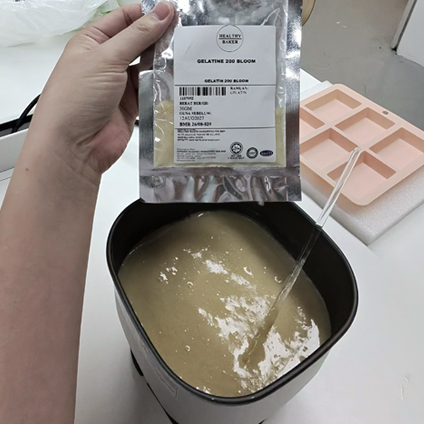
Cast Date: 19 September, 2026 | Mould: Pink Silicone Rectangular Tray
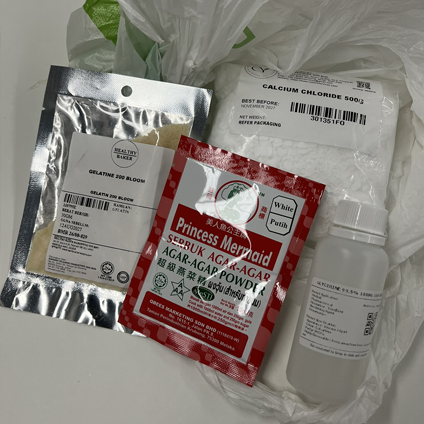
- Formulation Parameters: Water (250 ml), Gelatin Powder 200 Bloom (25 g), Eucheuma Cottonii Seaweed Powder (15 g), Glycerol (15 g), Beeswax (1 g).
- Process Observations: Pre-dissolving gelatin in room-temperature water enabled rapid homogenisation. Upon heating, the matrix thickened rapidly into a high-viscosity, adhesive-like syrup, requiring minimal simmer time.
- Casting and Microstructure: Yielded the lowest degree of air entrapment among all three trials due to high matrix cohesion, though setting occurred rapidly during casting.
Recipe Trial Comparison Summary
-
Parameter
Tray / Form Factor
-
Recipe Trial 1
(Pure Seaweed + CₐCl₂)Brown Rectangular Tray
-
Recipe Trial 2
(Seaweed + Agar)White Circular Cavity Tray
-
Recipe Trial 3
(Seaweed + Gelatin)Pink Rectangular Tray
-
Parameter
Dissolution Speed
-
Recipe Trial 1
(Pure Seaweed + CₐCl₂)Slow; required high heat
-
Recipe Trial 2
(Seaweed + Agar)Moderate to Fast
-
Recipe Trial 3
(Seaweed + Gelatin)Rapid pre-dissolution
-
Parameter
Pre-Cure Viscosity
-
Recipe Trial 1
(Pure Seaweed + CₐCl₂)Low (Porridge-like)
-
Recipe Trial 2
(Seaweed + Agar)Medium (Silky / Fluid)
-
Recipe Trial 3
(Seaweed + Gelatin)High (Gooey / Adhesive)
-
Parameter
Air Bubble Entrapment
-
Recipe Trial 1
(Pure Seaweed + CₐCl₂)High micro-bubbling
-
Recipe Trial 2
(Seaweed + Agar)Moderate surface bubbles
-
Recipe Trial 3
(Seaweed + Gelatin)Minimal
-
Parameter
Initial Setting Rate
-
Recipe Trial 1
(Pure Seaweed + CₐCl₂)Slow ambient set
-
Recipe Trial 2
(Seaweed + Agar)Moderate ambient set
-
Recipe Trial 3
(Seaweed + Gelatin)Fast thermal set
- Pre-Dissolution Accelerates Homogeneity: Pre-dissolving binders like gelatin in room-temperature water prior to heating drastically reduces cooking times and prevents clumping compared to direct heat dissolution of pure seaweed powder.
- Viscosity Dictates Air Entrapment: High-viscosity, adhesive-like formulations (gelatin-based) trap significantly fewer micro-bubbles during casting than low-viscosity, fluid slurries (pure seaweed with calcium chloride).
- Cold Water Coagulation Behavior: Hot seaweed-carrageenan mixtures instantly gel and coagulate into elastic films upon contact with cold running water, revealing rapid thermo-reversible setting properties.
Key Takeaways and Learned Insights
Strategic Action Plan
- Tactile Inspection and Shrinkage Audit: Inspect dried specimens from Recipe Trials 1–3 on September 21 to evaluate tensile flexibility, surface tackiness, volumetric shrinkage and structural integrity.
- Dehydrator vs. Ambient Comparison: Re-cast baseline recipes and run controlled trials inside the forced-air dehydrator to evaluate drying speed, warpage and optical density against ambient-cured control samples.
- Incorporate Structural Fillers: Introduce organic particulate fillers (e.g., spent coffee grounds, plant fibers, bio-char) into binder matrices to test density, structural stiffness and material reinforcement.
- Sodium Alginate Additive Trial: Test Sodium Alginate as a standalone hydrocolloid binder paired with calcium cross-linking.
- Natural Pigmentation and Marbling: Conduct aesthetic surface experiments using food-safe natural colorants to evaluate marbling patterns and dye binding within the biopolymer matrix.