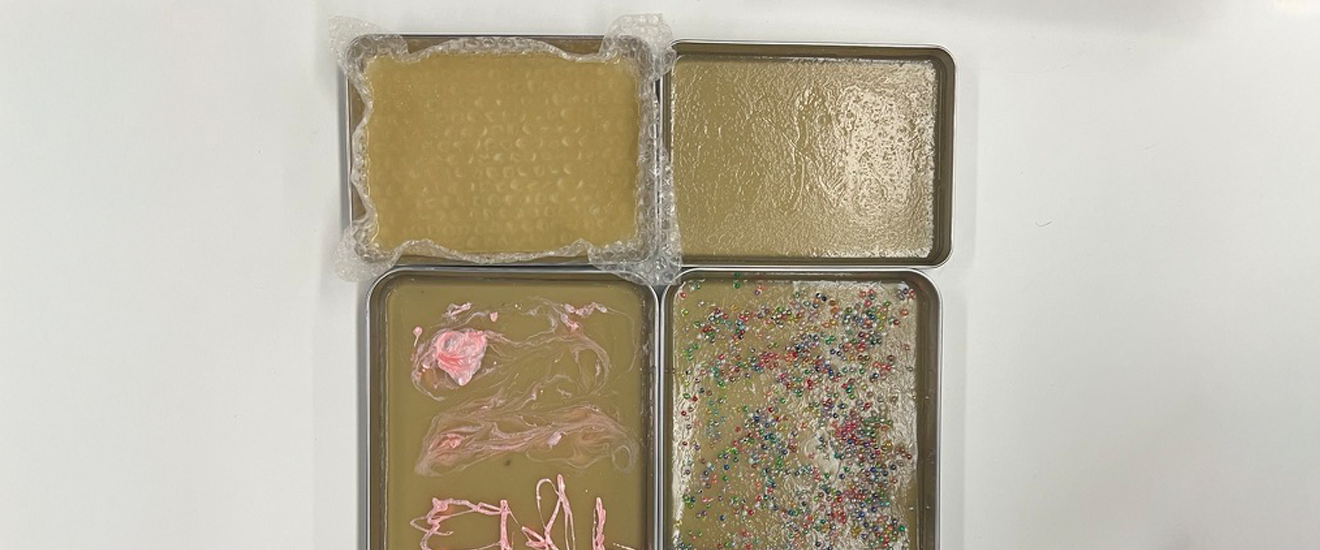
Recipe Testing
While awaiting the arrival of the step-down power transformer required to safely operate the industrial dehydrator, we conducted a progress alignment session with our mentors to establish project milestones and review deliverables for the semester.
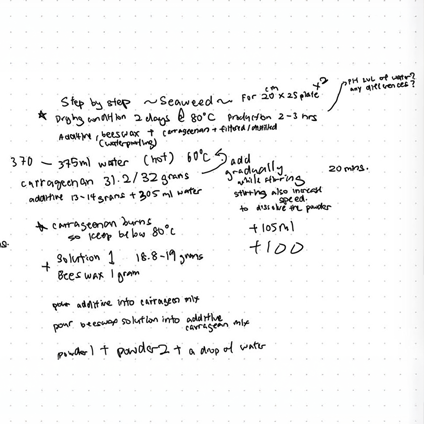
Following the review, we independently replicated the baseline MYCL seaweed biopolymer recipe to build hands-on familiarity with the synthesis process.
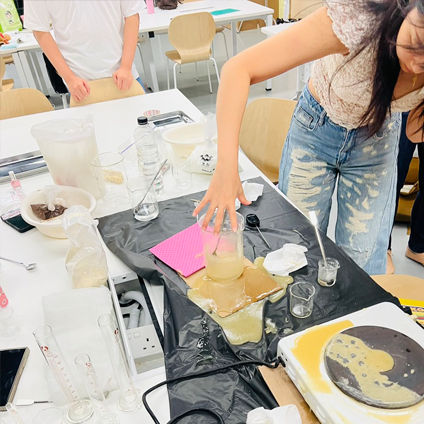
- Process Efficiency and Thermal Shock Incident: The manual cooking and agitation cycle requires nearly two hours of continuous stirring under heat to maintain matrix homogeneity. In an attempt to accelerate the cooling phase before casting, we transferred the heated glass beaker into a cold water bath. The rapid temperature differential caused thermal shock, shattering the beaker and spilling the batch.
- Key Takeaway: Forced cooling via thermal shock compromises laboratory safety and equipment integrity. The manual formulation phase is time-and-labor intensive at small scales, underscoring the necessity of automated agitation or larger batch processing for consistent material yield.
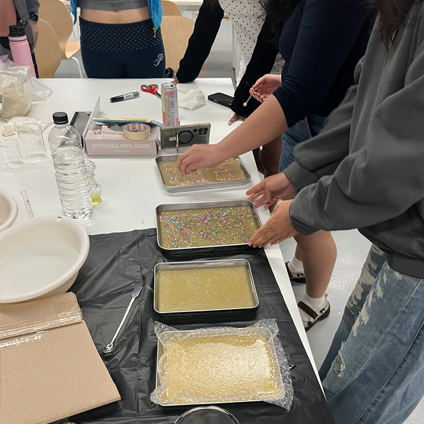
Activity: Preliminary Additive Experiments and Curing Observations
Using the re-prepared batch, we cast the biopolymer into curing trays and introduced initial additive variables, including pigments, cosmetic colorants, scents and surface particulate to observe their integration into the seaweed matrix during air-curing.
[Formulation Stage] → [Manual Stirring (2 hrs)] → [Casting into Trays] → [Additive Ingestion] → [Ambient Air-Cure]
- Additive Integration: Applying non-organic surface coatings and synthetic additives directly into the setting polymer raised immediate questions regarding material purity and end-of-life degradation.
- Ecological Considerations: Introducing synthetic chemicals or non-biodegradable additives risks leaching toxins during material breakdown. Moving forward, all recipe modifications will prioritize natural, non-toxic cross-linkers, bio-pigments and organic plasticizers to maintain a clean circular lifecycle.
Contextual Research and Material Precedents
To contextualize our baseline process audit and preliminary additive experiments within polymer processing safety and circular lifecycle ethics, research was conducted into thermal shock physics, hydrocolloid agitation mechanics and non-ecotoxic additive standards:
- Thermal Shock Mechanics in Borosilicate Laboratory Glassware: Subjecting heated hydrocolloid solutions (~80°C) to sudden cold-water bath immersion generates steep spatial temperature gradients across the glass wall. The rapid contraction of the exterior surface against the thermally expanded interior core exceeds the tensile strength of the glass, causing instantaneous structural fracture and reinforcing strict ambient cooling protocols.
- Hydrocolloid Dissolution and Agitation Kinetics: Replicating the baseline seaweed formulation without mechanical high-shear blending requires nearly two hours of continuous manual stirring under heat to prevent powder clumping and maintain matrix homogeneity. In industrial biopolymer processing, this high thermal-labor energy profile highlights the necessity of cold pre-dispersion and mechanical vortex shearing to achieve scalable batch consistency.
- Eco-Toxicity and Leachate Prevention in Biopolymer Additives: Introducing synthetic cosmetic colorants, fragrances, or unverified chemical additives into a biodegradable matrix creates a severe end-of-life hazard. As the polysaccharide binder breaks down in heat and water, non-organic additives leach directly into soil or aquatic ecosystems, necessitating a strict commitment to food-grade, non-toxic cross-linkers and organic pigments.
Visual Moodboard and Design Intent
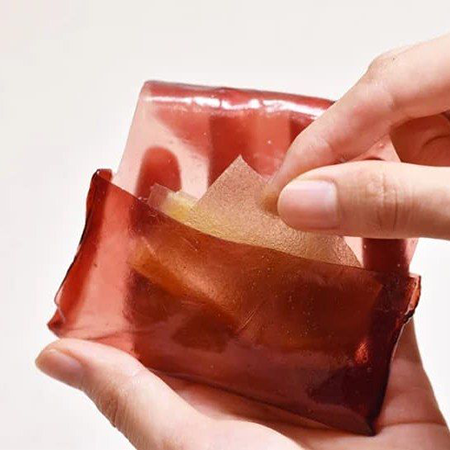
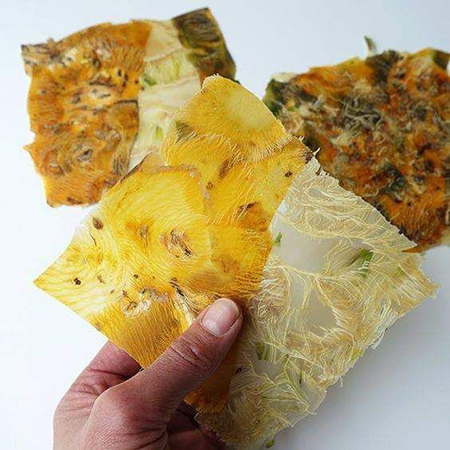
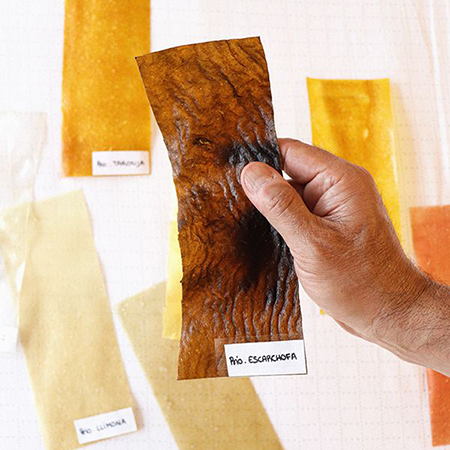
Alternative Craft and Traditional Material References
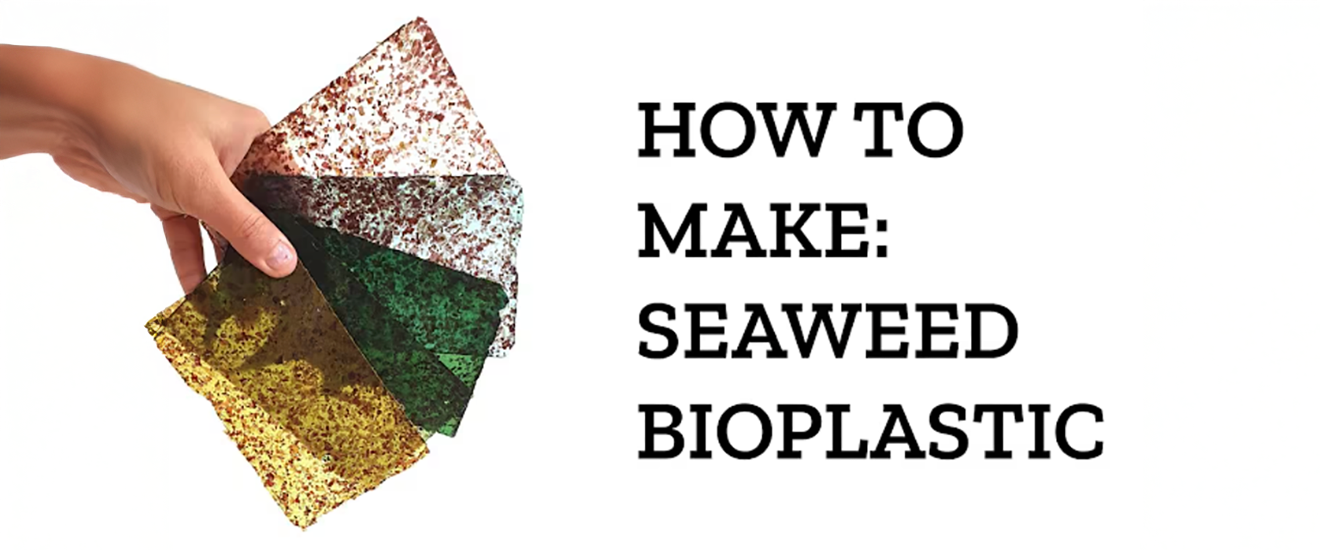
Critical Design Reflection
Reflecting on Week 2, independently replicating the baseline MYCL demonstration formula exposed critical operational and ethical vulnerabilities that directly shaped our subsequent research trajectory. Experiencing the two-hour manual stirring bottleneck firsthand, alongside the cold-water thermal shock incident that shattered our glass beaker, underscored the physical fragility and narrow thermal window of manual hydrocolloid processing.
More importantly, testing synthetic cosmetic colorants and scents on the curing trays triggered a vital ethical realization. Swapping petroleum plastics for a seaweed base is meaningless if we contaminate the matrix with synthetic, non-biodegradable additives that leach toxins during breakdown. Combined with the lack of chemical transparency in the baseline demonstration's proprietary powders, this audit laid the groundwork for our upcoming pivot toward an independent, 100% disclosed recipe library built strictly on safe, locally sourceable ingredients.
Key Takeaways and Learned Insights
- Vessel Thermal Shock Vulnerability: Forced cooling of hot biopolymer solutions via sudden cold-water immersion causes glass thermal shock and vessel breakage, establishing clear laboratory handling protocols for hot hydrocolloids.
- Manual Agitation Labor Intensity: Small-scale manual cooking requires nearly two hours of continuous stirring under heat to maintain matrix homogeneity, proving that manual agitation is inefficient and underscoring the need for scaled or mechanized blending.
- Chemical Purity vs. Life Cycle Integrity: Incorporating non-organic dyes or cosmetic additives at the casting stage risks toxic leaching during post-use environmental breakdown, establishing a rule to prioritize natural, non-toxic cross-linkers and bio-pigments.
Material Investigations and Next Steps
- Optical Clarity and Transparency: Test recipe variations to evaluate if the seaweed matrix can be rendered optically clear (similar to bio-epoxies) for potential lighting diffusers or transparent tubing.
- Elastomeric Bounds and Tensile Stretch: Systematically adjust plasticizer ratios (e.g., glycerin / sorbitol) to quantify the material’s elasticity, elongation limits and flexibility.
- Matrix Density and Rigid Composite Formations: Investigate whether compressed seaweed fiber matrices can be cured under pressure to form high-density structural boards or rigid composite panels.