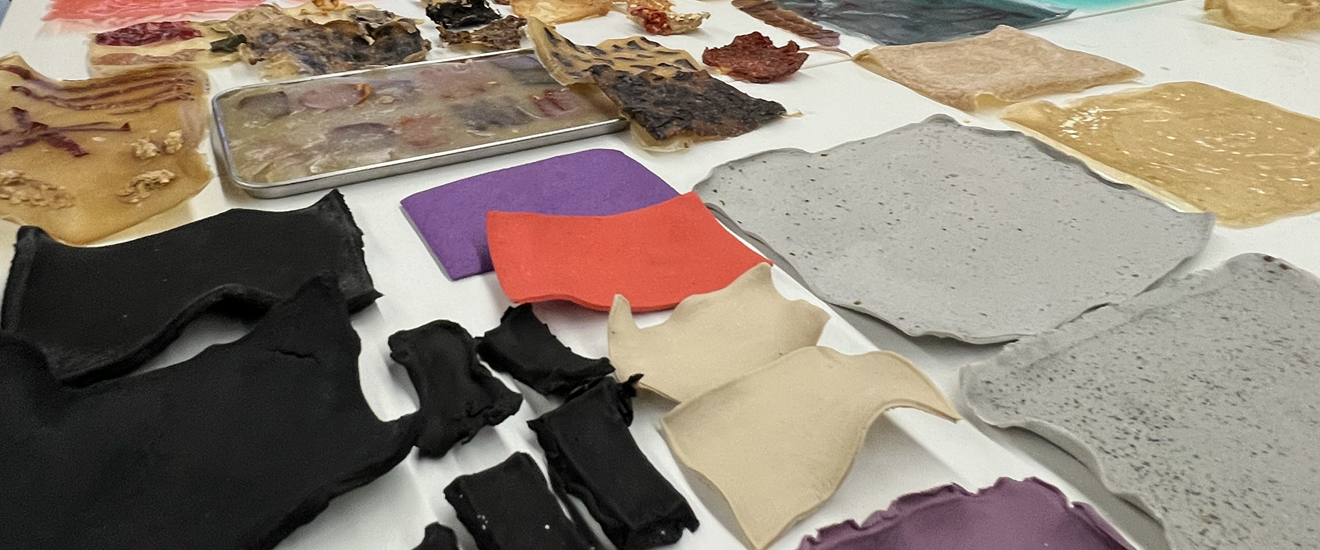
Post-Dehydration Specimen Audit and Process Review (Recipe Trials 19–21)
Evaluation of the Cellulose Nanocrystal (CNC) experimental series (Recipe Trials 19, 20, and 21) was conducted on November 9, addressing rheological flow bottlenecks, manual straining hazards, thermal shock gelation and recyclability.
[Trials 19 and 20: Sieve Filter / Cold Tray Shock] → [Instant Hydrocolloid Flash-Gelation] → [Lumpy / Uneven Surface] → [Trial 21 Master Workflow: Liquid-First Blender Loading] → [Hot-Pour (<80°C)] → [Defoamed Flat Matrix]
[Trial 19 Audit → High-Solid CNC Loading → Flash-Gelation on Cold Partition Mold → Fragmented Tar Mass]
[Trial 20 Audit → Sieve Filter Attempt → Cold Mesh Heat Sink Blockage → Surface Ridges and Uneven Flow]
[Trial 21 Audit → Master Hot-Pour and Isopropyl Defoaming → Smooth / Flat / Non-Shedding Conductive Matrix]


Key Audit Observations
Recipe Trial 19 (High-Solid Cellulose Nanocrystal Pilot Formula):
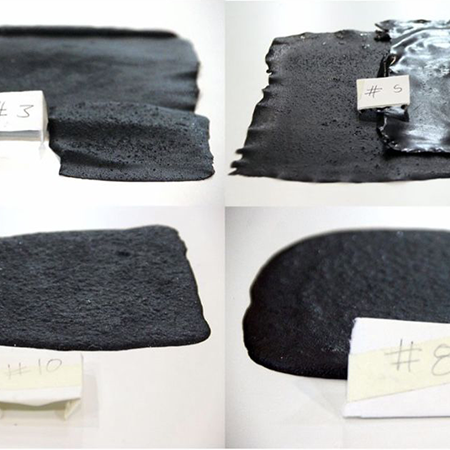
Visual and Tactile Surface: Cures into a thick, uneven black solid with severe internal stress fractures and irregular surface thickness.
Mechanical Performance: Extremely brittle along thin boundaries; lacks uniform flexural elasticity due to flash-gelation during casting.
Defect Root Cause: High solid loading (70 ml CNC suspension + 15 g carrageenan + 10 g charcoal) poured onto a room-temperature partitioned mold suffered instant thermal shock, causing the mixture to freeze into tar before self-leveling.
Recipe Trial 20 (Volumetric Optimization and Sieve Filtration Trial):
Visual and Tactile Surface: Forms a thick, rigid black sheet with prominent surface ridges and micro-crevices.
Mechanical Performance: High structural rigidity and compression strength, but retains localized brittle zones where manual scraping introduced flow seams.
Defect Root Cause: Attempting to strain hot carrageenan through a room-temperature metal sieve caused instant mesh clogging; the conductive metal wire acted as a heat sink, flash-freezing the hydrocolloid and forcing manual scraping onto the tray.
Recipe Trial 21 (Master Conductive Sensor Sheet):
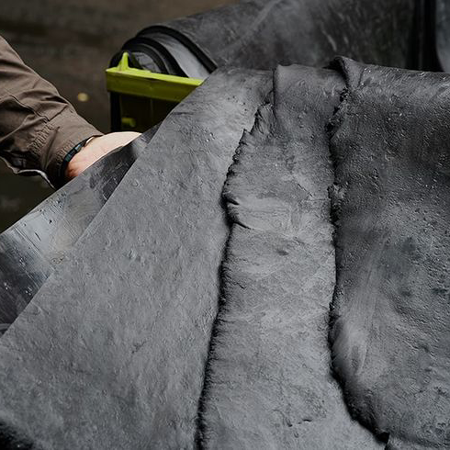
Visual and Tactile Surface: Cures into an ultra-smooth, planar, matte-black flexible film with zero surface carbon transfer or finger-staining upon handling.
Mechanical Performance: High structural toughness and elastomeric recovery; flexes and bends smoothly without perimeter tearing or localized stress cracking.
Defect Root Cause: Liquid-first blender stacking sheared CNC agglomerates prior to powder floating, while hot-pour casting onto a pre-warmed tray with isopropyl alcohol misting prevented thermal shock gelation and collapsed surface micro-bubbles.
Technical Analysis: Flash-Gelation Elimination, Thermal Management, and Reversibility
1. Liquid-First Blender Stacking Sequence
Loading tap water, glycerol, and Cellulose Nanocrystals into the blender cup first allows the high-speed blades to shear white CNC chunks into a uniform milky base. Floating dry carrageenan, activated charcoal and zinc oxide on top prevents powder caking at the base, ensuring a 100% lump-free slurry without manual sieving.
2. Elimination of Metal Sieve Thermal Sinks
Passing hot carrageenan hydrogels through room-temperature metal strainers triggers rapid thermal dissipation. The fine wire mesh absorbs thermal energy, causing the hydrocolloid to instantly transition from sol to gel and seal the grid. High-shear blender homogenization completely eliminates the need for physical filtration.
3. Hot-Pour Thermal Management
Maintaining the saucepan on a low heating burner directly adjacent to pre-warmed casting trays keeps the solution above its gelation threshold (>60°C). Pouring hot fluid directly onto pre-warmed surfaces ensures immediate self-leveling before cooling occurs, while an isopropyl alcohol mist pops surface micro-bubbles.
4. Circular Thermal Reversibility Proof
Because carrageenan and Cellulose Nanocrystals form thermally reversible hydrogen-bonded networks, fully dried sheets can be shredded into <1 cm² fragments, re-hydrated in water, re-melted under 80°C, and re-cast. The recycled matrix re-cures flat with zero loss in structural elasticity or conductive performance.
Contextual Research and Material Precedents
To ground our hydrocolloid biopolymer exploration within contemporary material science and sustainable design benchmarks, literature and studio precedents were audited across bio-matrix systems:
- Nanoscale Polysaccharide Reinforcement: Cellulose Nanocrystals (CNCs) serve as a high-aspect-ratio crystalline scaffold within polysaccharide networks. While standard carrageenan hydrogels rely strictly on double-helix cross-linking, integrating aqueous CNC suspensions introduces dense inter-chain hydrogen bonding. This structural interlock encapsulates particulate fillers, such as fine activated charcoal, preventing surface dusting and mechanical embrittlement.
- Industrial Bio-Fabrication and Studio Precedents: Our iterative processing protocol references leading bioplastic research practices, including Keel Labs (formerly AlgiKnit) in seaweed-derived biopolymers and commercial bio-composite innovators such as MYCL (Mycotech Lab). Evaluating industrial scaling techniques highlighted the necessity of replacing manual filtration with high-shear vortex emulsification and enforcing strict liquid-first blender stacking to achieve repeatable, defect-free casting.
Visual Moodboard and Design Intent
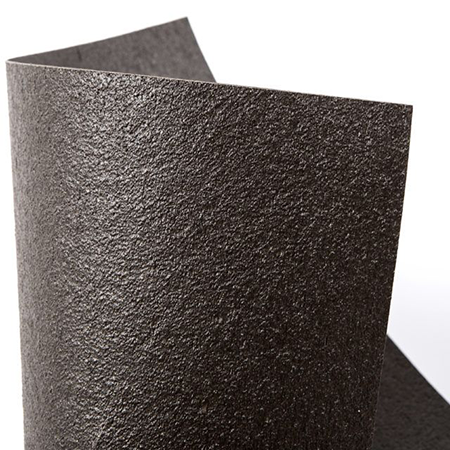
Alternative Craft and Traditional Material References
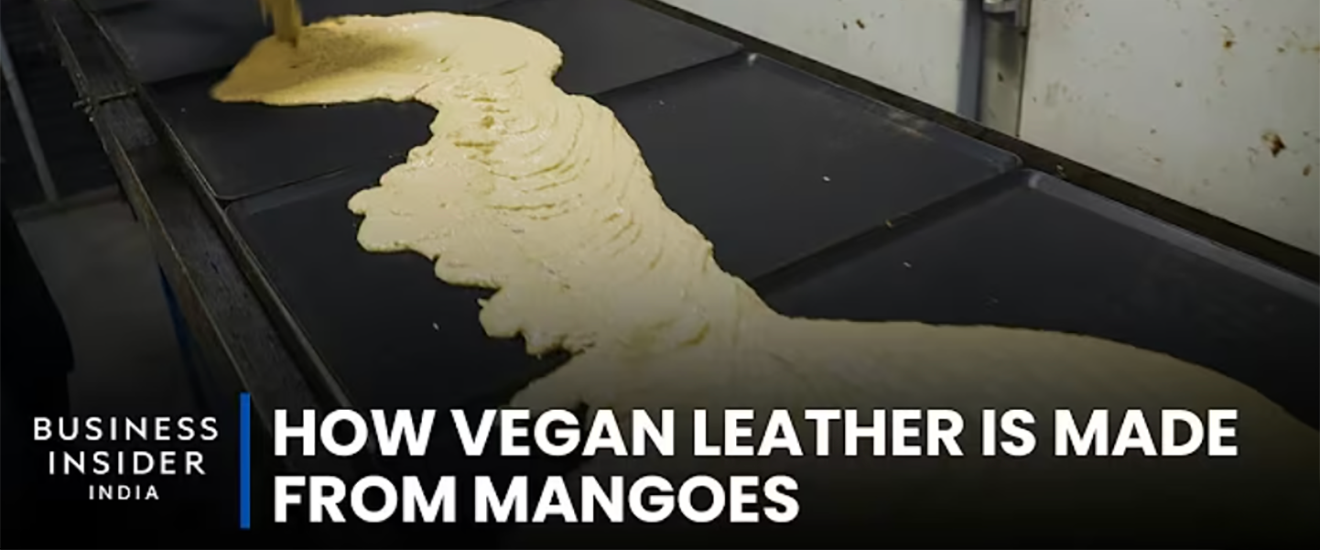
Critical Design Reflection
Reflecting on this final milestone entry prior to our semester interim critique, the technical hurdles encountered across Trials 19 through 21, specifically hydrocolloid flash-gelation, metal sieve heat-sink blockages, and severe surface lumping, proved essential in defining our Master Processing Protocol. Eliminating physical filtration in favor of high-shear vortex pre-mixing and maintaining active stovetop heat during pre-warmed tray casting transformed an unpourable paste into a flat, non-shedding, highly flexible bio-elastomer.
Furthermore, validating the 100% thermal reversibility of Trial 21 through complete scrap shredding, re-hydration and re-casting confirms a true zero-waste closed-loop workflow. This successful recycling demonstration establishes a robust material foundation as we prepare to present our specimen series (TW01, TC01, TC02, TC04, TM01, TM04) to the MYCL team during our upcoming site visit to Bandung, Indonesia.
Refined Recipe Formulations (Recipe Trials 22 and Recycled Trial 23)
[Liquid Base + Glycerol + CNC Pre-Blend (10s)] → [Float Dry Powders] → [Vortex Blend (15s)] → [Stovetop Cook (<80°C)] → [Pre-Warmed Hot-Pour and Alcohol Mist]



Recipe Trial 22: Master Conductive Sensor Sheet (Gravimetric CNC Formula)
Cast Date: 5 November 2026
- Formulation Parameters: Distilled Water (385 ml), Cellulose Nanocrystals (15 ml / three 5 g scoops), Seaweed Powder (16 g — accurate gravimetric mass), Fine Activated Charcoal (10 g), Glycerol (16 ml), Zinc Oxide Powder (0.5 g), Calcium Chloride (0.3 g dissolved separately).
- Process Observations: Executed strict liquid-first stacking: water, glycerol, and Cellulose Nanocrystals were pre-blended for 10 seconds to shear white CNC agglomerates into a smooth milky base. Seaweed powder, charcoal, and zinc oxide were floated on top and blended for 15 seconds. Cooked under 80°C and poured directly from the active burner onto a pre-warmed silicone mat. The fluid self-leveled smoothly, was defoamed via 75% isopropyl alcohol mist and set into an immaculate, non-shedding black matrix.
- Casting and Microstructure: Executed hot-pour casting directly from the active stove burner onto a pre-warmed, flat metal tray. The liquid flowed smoothly like hot syrup, self-leveling across the entire tray plane before gelation occurred. Surface tapping and 75% isopropyl alcohol misting instantly collapsed micro-bubbles, while a diluted CaCl2 spray established a smooth top boundary layer. After multi-stage dehydrator curing and ambient conditioning, the sheet peeled off easily as an ultra-smooth, planar, matte-black flexible film. The CNC-reinforced matrix completely bound the carbon particles, yielding zero finger-staining upon tactile handling while preserving structural elasticity and high tensile toughness.
Recipe Trial 23: Thermal Reversibility and Circular Remelt Sheet
Cast Date: 8 November 2026
- Formulation Parameters: Shredded Cured Scraps of Trial 21 (100% dry mass reclaimed), Distilled Water (380 ml — rehydration carrier), Isopropyl Alcohol 75% Mist (defoamer spray).
- Process Observations: Cured Trial 21 specimens were shredded into <1 cm² fragments and combined with 380 ml water in a saucepan. Heated under 80°C until carrageenan chains re-dissolved. Transferred to NutriBullet and blended warm for 15 seconds to re-disperse charcoal and CNCs. Poured hot onto a pre-warmed metal tray, misted with alcohol, and cured at 49°C.
- Casting and Microstructure: Re-cures into a smooth, planar, non-shedding matte-black conductive sheet identical to the original Trial 21. Re-melting re-establishes hydrogen bonding throughout the carrageenan-CNC-carbon network, demonstrating 100% thermal reversibility, zero-waste recyclability and pristine flexural stability
Key Takeaways and Learned Insights
- Complete Thermal Reversibility: Carrageenan-CNC biopolymer matrices can be shredded, re-hydrated (380 ml water), re-blended, and hot-cast without losing mechanical elasticity or conductive performance.
- Elimination of Sieve Cold Shock: Metal strainers act as thermal sinks that trigger instant flash-gelation; high-shear vortex pre-blending completely replaces manual filtration.
- Liquid-First Vortex Stacking: Layering base liquids before dry powders prevents blade-caking and ensures complete powder dispersion.
- Hot-Pour Thermal Management: Keeping the saucepan warm adjacent to pre-warmed casting trays allows hydrocolloid mixtures to self-level into defect-free sheets prior to sol-to-gel phase transition.
Strategic Action Plan
- Interim Critique Preparation (16 November 2026): Mount shortlisted specimens (TW01, TC01, TC02, TC04, TM01, TM04) onto standardized exhibition display boards alongside technical data labels.
- MYCL Headquarters Site Visit (2–9 December 2026): Travel to Bandung, Indonesia to present biopolymer samples to the Mycotech Lab (MYCL) team, audit commercial bio-composite manufacturing processes, and gather expert feedback on scalable bio-leather production.
- Final Semester Journal Resume (Late January 2027): Resume creative process documentation upon returning to studio, incorporating MYCL review insights, auxetic net-bag pattern laser-cutting optimization and final showcase display assembly.