Client Specimen Display and Comprehensive Material Audit
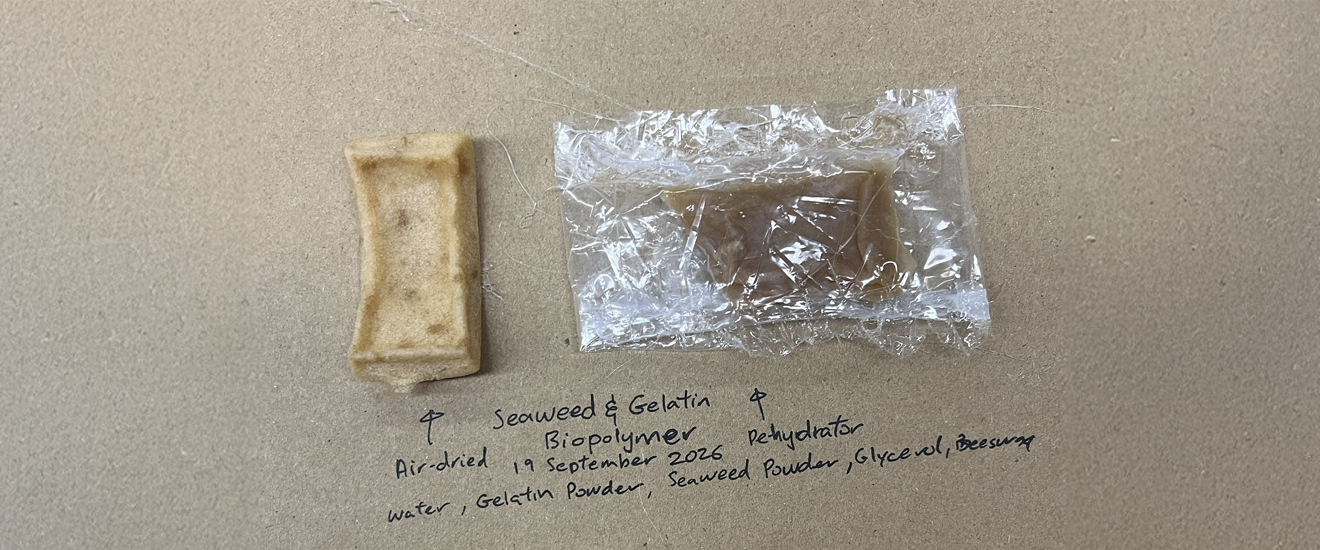
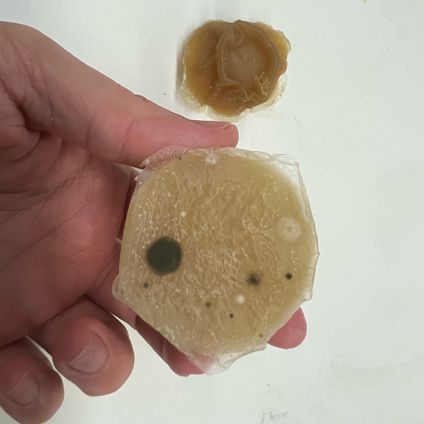
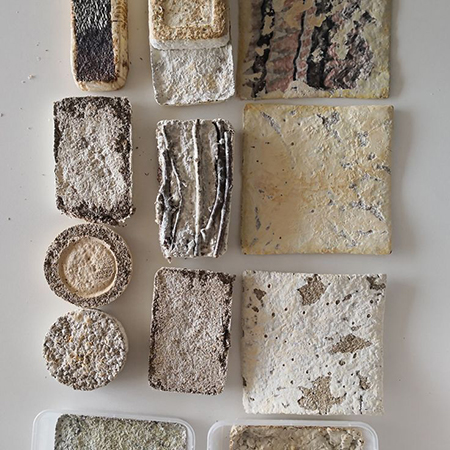
In preparation for an on-site project review with client representative Adi (MYCL), all experimental specimens from Weeks 1 through 6 were mounted on presentation boards for visual and physical evaluation. Fragile, crumbling or non-cohesive samples were sealed in cellophane packages to prevent environmental degradation and loss of particulate.
Specimen Audit Findings
-
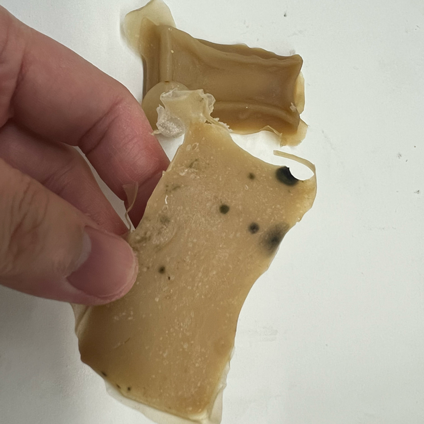
Recipe Trials 1–3
(Pure Binders)
- Stable matrix
- Prone to mold in high humidity -
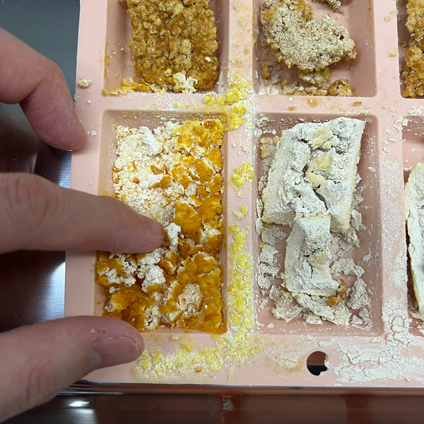
Recipe Trials 4–6
(Mineral Fillers)
- Chalky/brittle
- Mold airflow bottleneck -
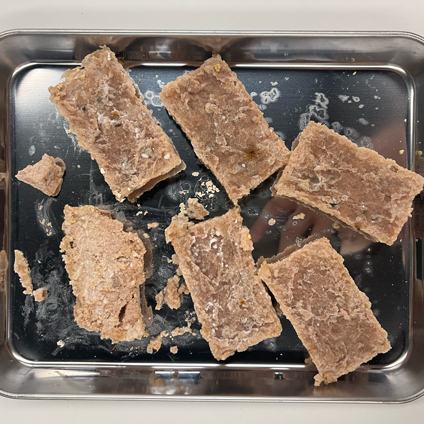
Recipe Trial 7
(Salt-Charcoal Aggregate)
- High internal moisture retention
- Requires 20+ hrs forced-air dehydration at 49°C
Key Audit Observations
Recipe Trials 1–3 (Unfilled Hydrocolloids):
Formulations without particulate fillers maintained structural cohesion but exhibited mold susceptibility over time under Singapore's ambient relative humidity when stored without desiccation control.
Recipe Trials 4–6 (Mineral Composites):
Specimens dehydrated into rigid, chalky, or brittle structures. Deep silicone cavity molds created airflow bottlenecks on the underside, leading to non-uniform moisture loss and localized crumbling upon desiccation.
Recipe Trial 7 (Salt and Charcoal Aggregate):
High hygroscopic retention from fine pink salt required an additional 12–16 hours of forced-air dehydration at 49°C to achieve full core desiccation, eventually setting into a hard, plaster-like solid.
Technical Analysis: Biological Degradation and Dehydration Optimization
1. Environmental Mold Dynamics
Organic biopolymer matrices (Eucheuma cottonii carrageenan, gelatin, agar) provide an abundant carbon/protein nutrient source for atmospheric fungal spores. In humid local conditions, enclosing partially dried specimens creates micro-environments that trap moisture, accelerating fungal growth and releasing volatile sulfur compounds (H2S off-gassing).
2. Functional Role of Zinc Oxide (ZnO)
To address microbial susceptibility and off-gassing, Zinc Oxide (ZnO) was introduced into subsequent formulations:
- Antimicrobial Protection: Functions as a broad-spectrum antifungal/antibacterial agent, disrupting fungal cell membrane permeability and inhibiting spore germination.
- Odor Neutralization: Reacts chemically with volatile sulfur compounds to form stable, odorless zinc sulfide (ZnS), suppressing sulfur off-gassing during thermal processing and curing.
- Pigmentation: Acts as an inorganic opacifier, imparting a uniform neutral base to bioplastic sheets.
3. Process and Mold Optimization
- Mechanical Blending: Incorporating high-speed cold blending prior to heating ensures complete dispersion of dry powders (ZnO, charcoal, seaweed) in cold water, eliminating lumps and reducing stovetop agitation time.
- Large-Surface Metal Trays: Transitioning from deep silicone molds to flat, high-thermal-conductivity stainless steel trays improves airflow exposure, prevents bottom moisture traps and enables uniform sheet formation.
Contextual Research and Material Precedents
To transition from raw empirical recipe trials toward industrial-grade bio-composites, research was expanded into antimicrobial preservation, surface-tension physics and eco-design life cycle methodology:
- Antimicrobial Bio-Defense and Sulfur Off-Gassing Neutralization: Natural polysaccharide matrices (such as carrageenan hydrocolloids) provide an abundant nutrient source for atmospheric fungal spores under humid tropical conditions. Incorporating inorganic Zinc Oxide (ZnO) acts as a broad-spectrum antifungal agent that disrupts fungal cell membrane permeability while chemically reacting with volatile sulfur compounds (H₂S) to form stable, odor-neutralized zinc sulfide (ZnS).
- Surface Tension Mechanics in Defoaming: Casting viscous hydrocolloid solutions traps micro-bubbles that create mechanical defects and surface pinholes upon curing. Spraying a fine mist of 75% isopropyl alcohol (IPA) rapidly lowers the surface tension across the liquid-air interface, forcing trapped air pockets to burst instantly without causing premature polymer cross-linking or chemical residue.
- Life Cycle Assessment (LCA) and Functional Material Circularity: Incorporating smart responsive additives, such as thermochromic leuco dye microcapsules, introduces a critical LCA trade-off. While the seaweed-glycerin, ZnO base remains 100% bio-degradable, synthetic microcapsule shells resist biological breakdown, requiring future iterations to benchmark natural pH-sensitive botanical pigments against industrial performance requirements.
Visual Moodboard and Design Intent
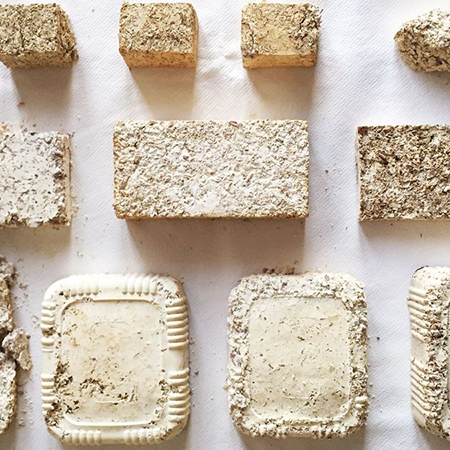
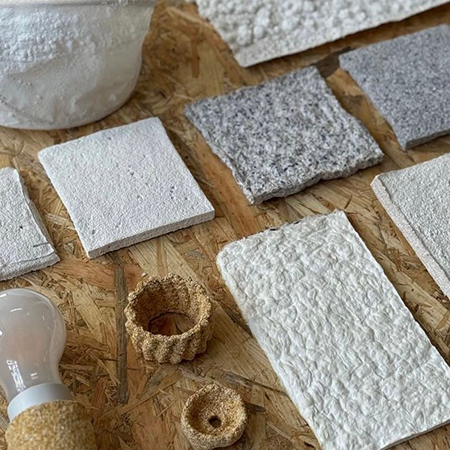
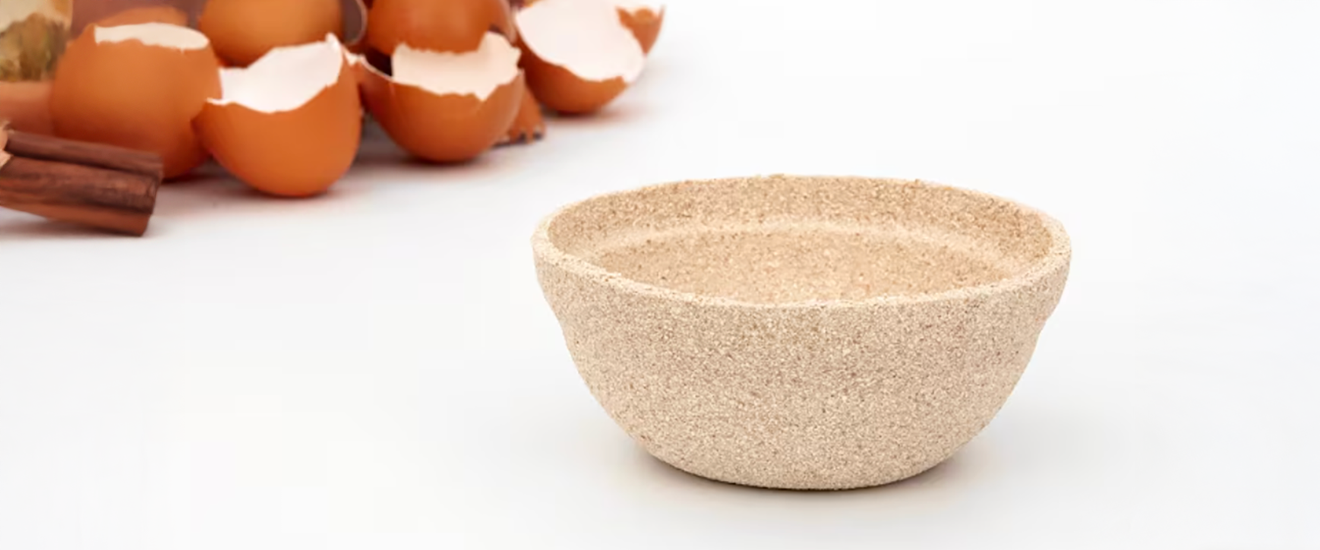
Alternative Craft and Traditional Material References
Critical Design Reflection
Reflecting on Week 8, presenting our six-week specimen portfolio to client representative Adi (MYCL) marked a major developmental turning point. Packaging fragile, chalky, or decaying early swatches clearly underscored that raw bio-matrices require strict moisture control and active antimicrobial stabilization to achieve commercial viability.
Introducing Zinc Oxide (ZnO) and transitioning from deep silicone cavity molds to high-thermal-conductivity stainless steel trays solved both our biological degradation issues and drying airflow bottlenecks. Furthermore, evaluating the LCA trade-offs in Trial 10 reinforced our commitment to circular design: while functional additives unlock exciting interactive user experiences, mastering pure bio-based performance remains the core foundation of our material design framework.
Detailed Recipe Formulations and Isolated Additive Trials
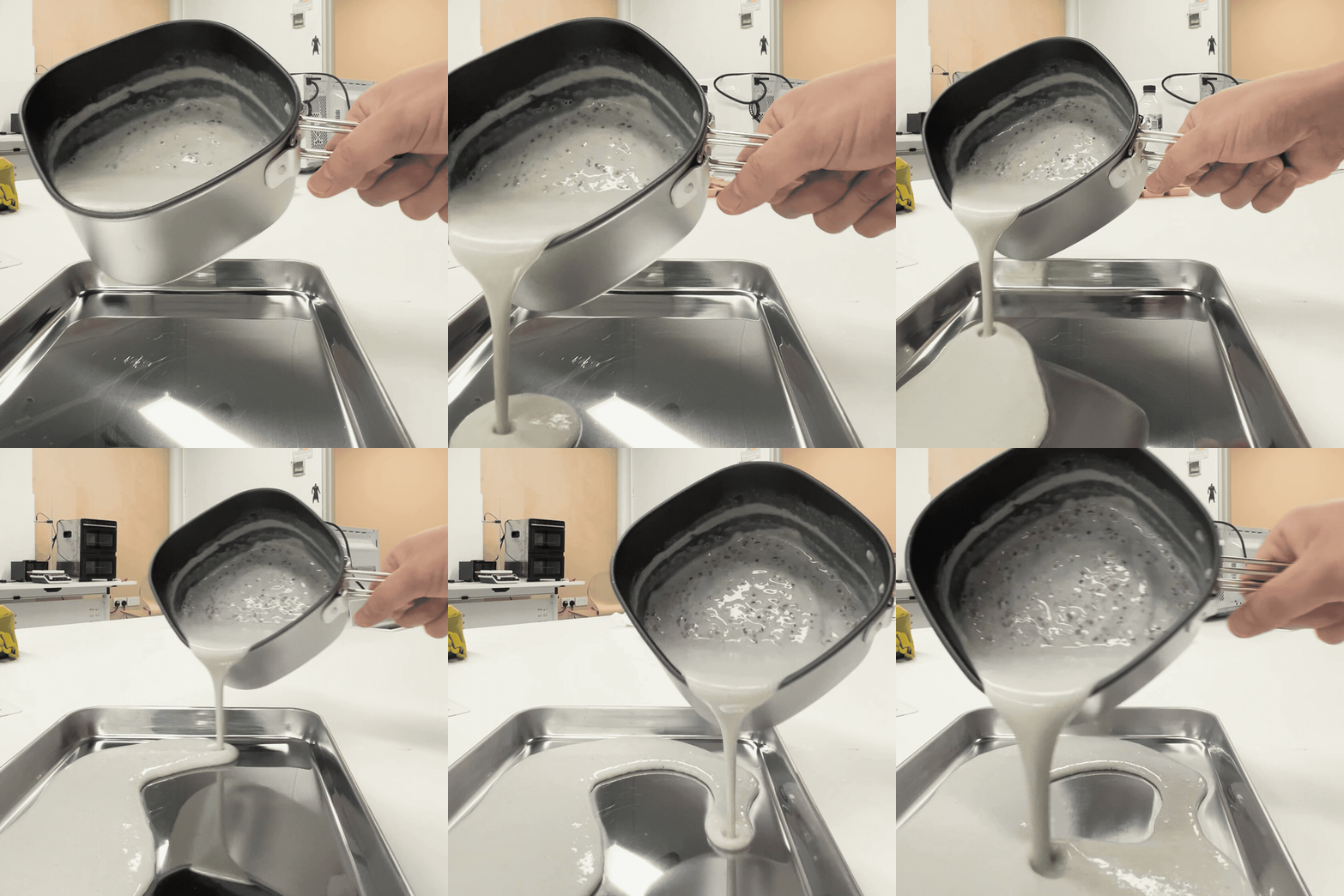
Recipe Trial 8: Activated Charcoal and Seaweed Flexible Sheet
Cast Date: 1 October, 2026
- Formulation Parameters: Water (350 ml), Seaweed Powder (16 g), Activated Charcoal Powder (16 g), Glycerol (16 ml).
- Process Observations: Cold pre-blending produced a uniform dark fluid. During stovetop heating (<80°C), larger charcoal granules remained suspended rather than dissolving. ZnO introduced a light-grey tint to the liquid matrix.
- Casting and Microstructure: Poured smoothly across a flat stainless steel tray (19 cm X 14 cm mold area). Suspended charcoal particles created a speckled, dual-tone visual texture resembling a "cookies-and-cream" pattern within a flexible sheet.
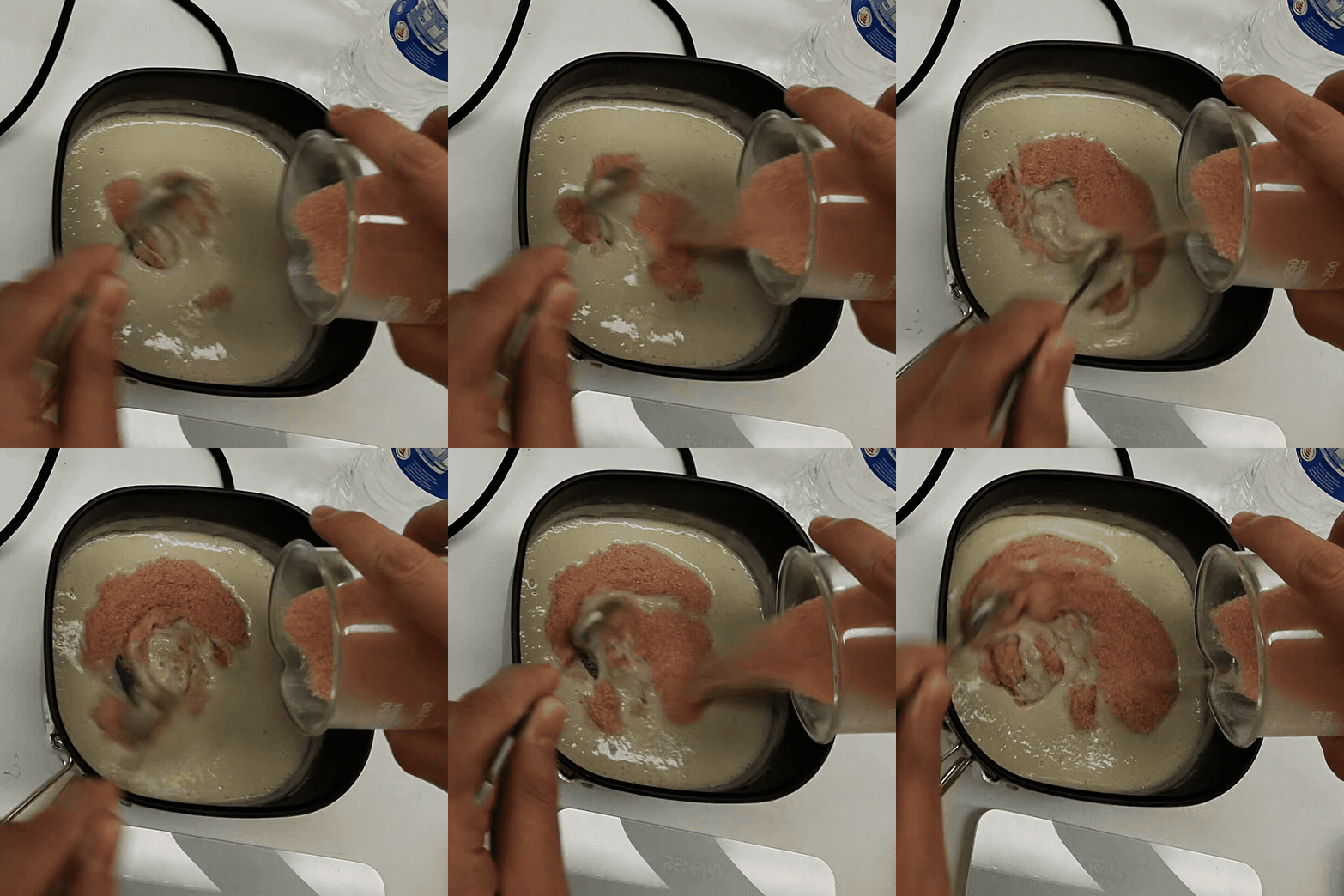
Recipe Trial 9: Himalayan Pink Salt and Seaweed Hard-Cast Composite
Cast Date: 2 October, 2026
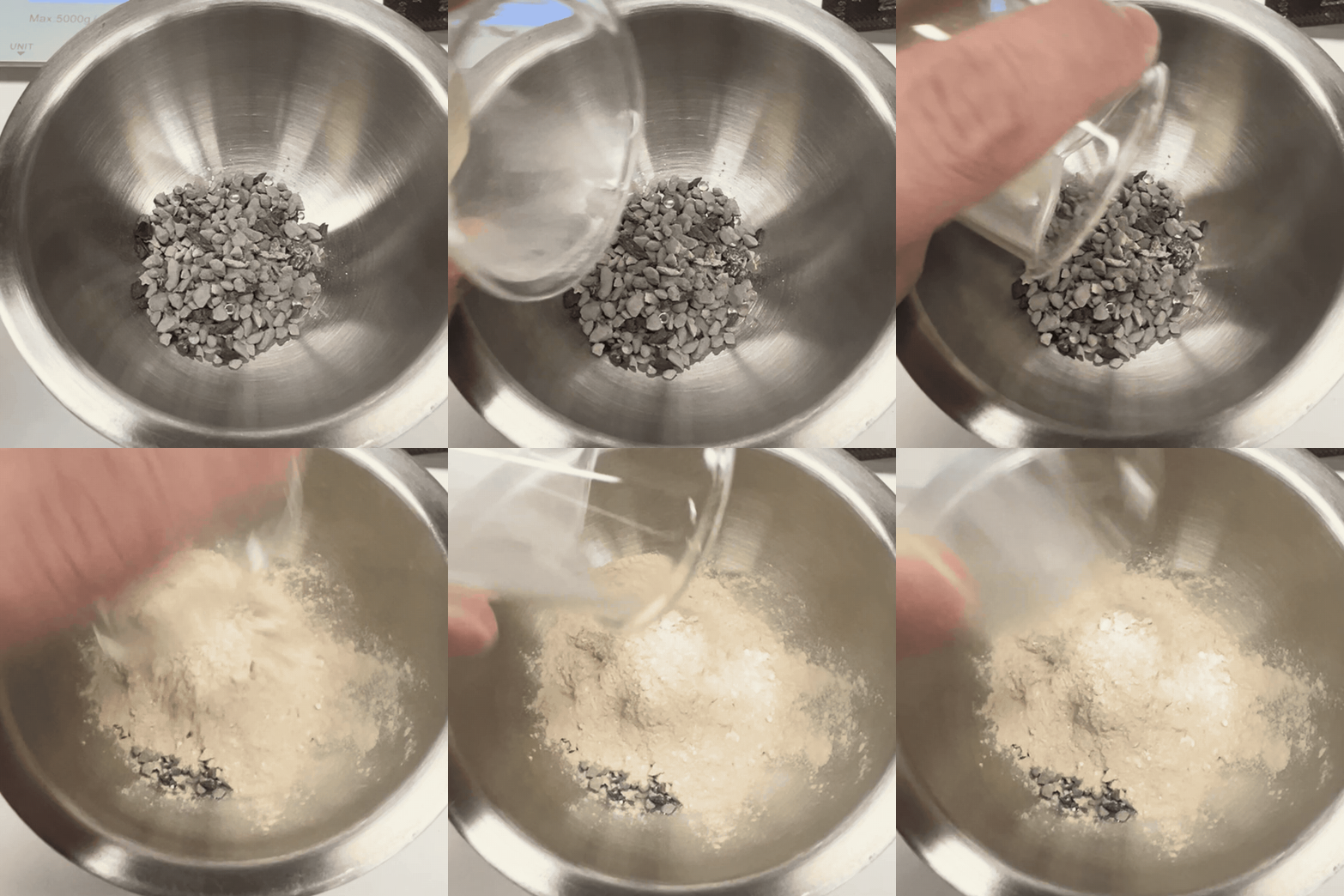
- Formulation Parameters: Water (250 ml), Seaweed Powder (12 g), Fine Himalayan Pink Salt (120 g), Glycerol (4 ml), Zinc Oxide Powder (1.5 g).
- Process Observations: Seaweed powder and ZnO were pre-blended in cold water before thermal activation. Pink salt was folded into the heated base off-flame, transforming the fluid into a pink, high-viscosity slurry.
- Casting and Microstructure: To prevent cracking across large surface areas due to high mineral rigidity, the composite was packed into small silicone cavity molds. As water evaporated during 49°C dehydration, salt grains locked into a dense, rigid mineral aggregate with minimal volumetric shrinkage.
Technical Analysis: Biological Degradation and Dehydration Optimization
To explore functional material properties beyond baseline physical performance, trials were conducted to introduce interactive thermal color-reactivity into the seaweed biopolymer matrix. Introducing synthetic microcapsules requires a strict Life Cycle Assessment (LCA) to evaluate trade-offs against project sustainability goals.
Life Cycle Assesment Trade-Off
-
Production Phase
- Low-carbon base
- Seaweed carbon sink benefit -
Active Life Phase
- Mold-resistant
- Odor-neutralized
- Interactive -
End-of-Life Phase
- Seaweed/Zinc matrix degrades
- Microplastic residue from leuco dye resin shells
Production Phase:
Seaweed cultivation acts as a natural marine carbon sink. Processing energy (blender + 49°C forced-air dehydrator) remains minimal relative to synthetic polymer manufacturing.
Active Life Phase:
ZnO neutralizes H2S sulfur off-gassing and suppresses fungal germination without synthetic chemical preservatives. Material is non-edible due to inorganic mineral additives and pigment capsules.
End-of-Life Phase (Partial Circularity — 95% Bio-based):
Seaweed binder, glycerin, and ZnO mineral residues break down organically in soil environments. However, microscopic polymer resin shells encapsulating leuco dyes resist natural composting, leaving minor microplastic residues.
Strategic Verdict:
Thermochromic microcapsules serve as an effective prototyping exploration for functional, responsive design. To achieve 100% circular, zero-waste outcomes in future iterations, synthetic microcapsules must be substituted with natural bio-derived color-shifting compounds (such as pH-sensitive plant anthocyanins or microbial pigments) as supply chains develop.
Recipe Trial 10: Thermochromic Purple and Seaweed Flexible Sheet
Cast Date: 2 October, 2026
- Formulation Parameters: Water (380 ml), Seaweed Powder (16 g), Glycerol (16 ml), Zinc Oxide Powder (2.5 g), Thermal Purple Pigment Powder (3.5 g microcapsules), Surface Defoamer (75% Isopropyl Alcohol Spray).
- Process Observations: Cold pre-blending for 30–45 seconds produced a homogeneous purple liquid without thermal activation or microcapsule shear damage. Stovetop cooking (<80°C) successfully activated the carrageenan hydrocolloid into a viscous, vibrant magenta-purple emulsion.
- Casting and Microstructure: Cast onto a flat stainless steel tray (19 cm X 14 cm surface area). Fine-mist spraying with 75% isopropyl alcohol instantly collapsed surface tension, popping trapped air bubbles and producing a smooth, glossy, defect-free cast surface.
Key Takeaways and Learned Insights
- Surface Tension Defoaming via Alcohol Spray: Applying a fine mist of 75% isopropyl alcohol to newly cast biopolymer sheets lowers surface tension immediately, collapsing micro-bubbles without leaving chemical residue or disrupting matrix cross-linking.
- Thermal Thresholds for Smart Additives: Heat-sensitive functional additives (such as thermochromic leuco dye microcapsules) must be processed strictly below 80°C to preserve the polymer's structural integrity and avoid degrading the capsule wall structures.
- LCA Trade-offs in Material Innovation: Adding functional performance (e.g., smart color-shifting) often introduces non-biodegradable synthetic additives, requiring a deliberate design decision between active product functionality and 100% circular end-of-life breakdown.
Strategic Action Plan
- Dehydration Audit of Recipes 8 and 9: Inspect cured flat sheets of Recipe 8 and hard casts of Recipe 9 to evaluate flexibility, core desiccation and mold resistance.
- Rice Flour Starch Matrix Trial: Formulate starch-hydrocolloid composite sheets using rice flour to evaluate amylose/amylopectin cross-linking.
- Aesthetic Marbling and Surface Texturing: Experiment with dual-pour swirl techniques using natural food-grade pigments and dual-rough/smooth contact plates.