Live Biofilm Production Demo and Studio Setup
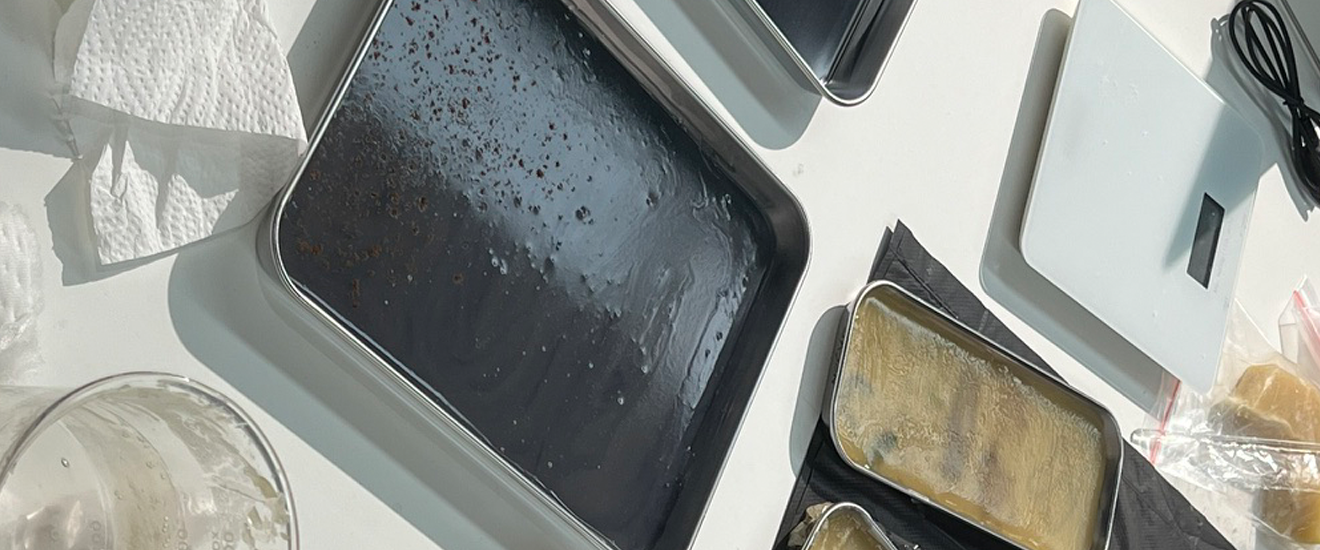
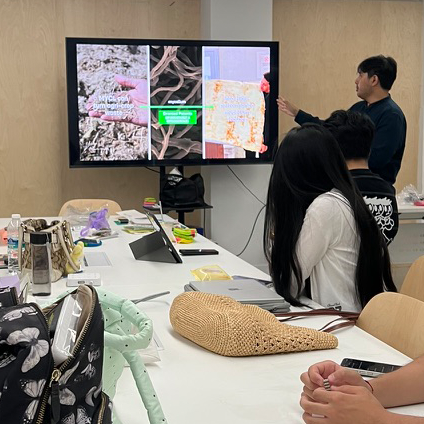
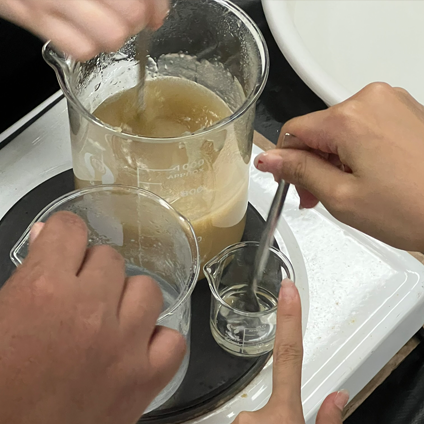
We initiated our FYP studio setup and hosted a live production demonstration led by Adi from MYCL, utilizing raw resources sourced from their Indonesian processing facility (Eucheuma Cottonii / Kappaphycus Alvarezii).
- Synthesis Process: The two-hour formulation process involved heating water and raw seaweed powder in a beaker over an induction heater. Ingredients were introduced sequentially under constant mechanical agitation to ensure matrix homogeneity: carrageenan, beeswax, three proprietary additives and additional water.
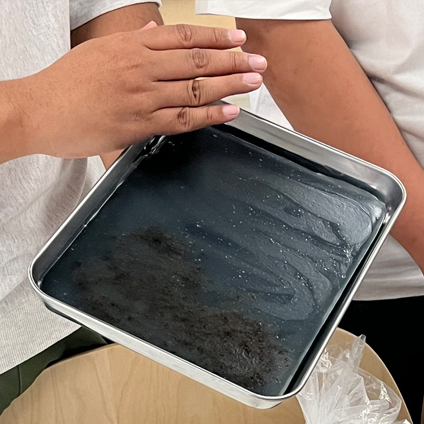
- Curing and Technical Bottleneck: The hot, blended emulsion was cast into A5 metal trays for dehydration. Due to studio dehydrator malfunctions, the samples could not undergo forced-air drying at the target temperature and were left to ambiently cure in the studio space to observe initial physical formation.
Physical Sample Audit and Studio Safety Observations
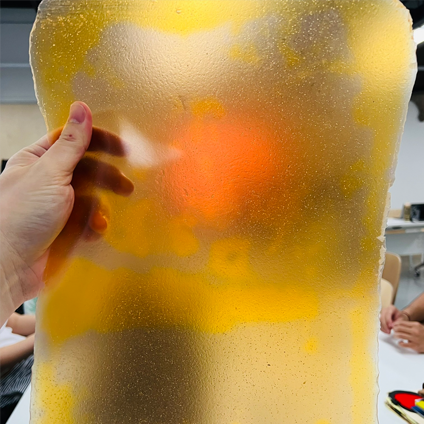
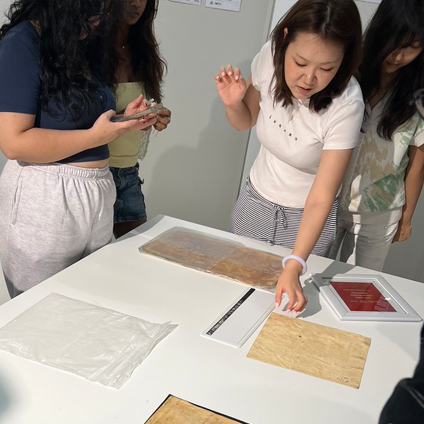
In addition to the live demo, we conducted a physical assessment of pre-cured seaweed biofilm samples provided by MYCL.
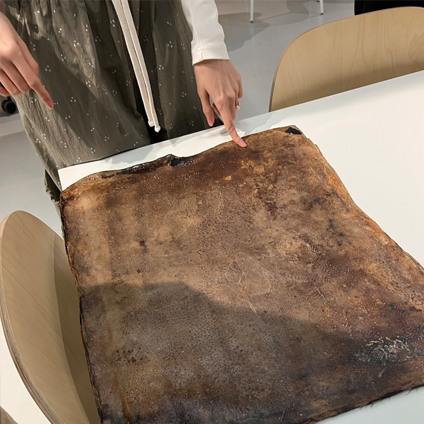
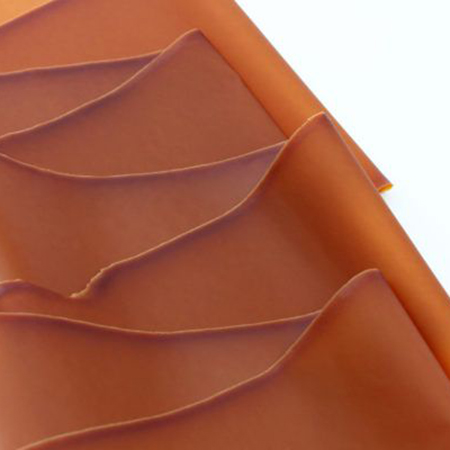
- Tactile and Mechanical Properties: The material exhibited high flexibility, rubbery elasticity and a cold, damp surface texture. Mechanical metrics provided indicate a flex resistance exceeding 100,000 cycles, along with moderate splash tolerance and variable visual opacity.
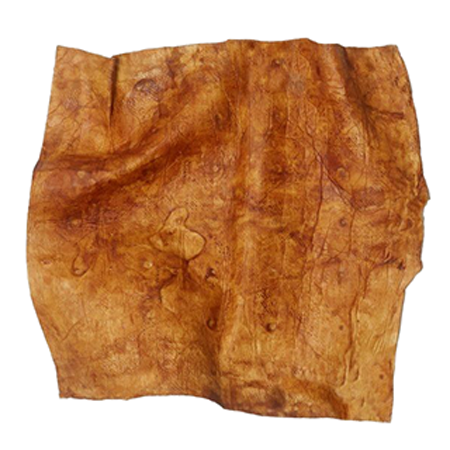
- Degradation and Chemical Off-Gassing: Physical samples displayed irregular color patchiness and significant dye fading. Furthermore, a strong, pervasive sulfur-like odor (characteristic of hydrogen sulfide) filled the space during handling, causing mild headaches among team members. Moving the curing trays to a high-airflow zone mitigated the immediate physical discomfort but highlighted an critical material safety issue.
Technical and Environmental Analysis
-
Audit Domain
Material Degradation
-
Empirical Observation
Spontaneous ambient
degradation and premature
color loss prior to soil burial. -
Industrial and Technical Impact
Indicates chemical instability
in the current additive recipe,
leading to unpredictable shelf-life
during storage or transport in
humid climates like Singapore.
-
Audit Domain
Energy Consumption
-
Empirical Observation
Curing requires dual-chamber
forced-air dehydration
(1000–1100W for 48 hours;
~24–31 kWh/batch). -
Industrial and Technical Impact
High thermal energy demands
during the drying phase
significantly increase the
material’s embodied carbon,
challenging its net-positive
environmental claims.
-
Audit Domain
Chemical Additives and Dyes
-
Empirical Observation
Use of conventional clothing
dyes to fix color fading during
production. -
Industrial and Technical Impact
Introducing synthetic,
heavy-chemical colorants
risks environmental
leaching during end-of-life
breakdown and complicates
regulatory compliance
(e.g., EU REACH standards).
Contextual Research and Material Precedents
To frame our initial partnership onboarding and baseline biofilm audit within marine biopolymer chemistry and industrial sustainability standards, research was conducted into algal decomposition profiles, embodied manufacturing energy and chemical regulatory frameworks:
- Algal Sulfur Off-Gassing and Anaerobic Decomposition: Marine macroalgae (Eucheuma cottonii and Sargassum species) contain high concentrations of sulfated polysaccharides (carrageenan) and sulfur-bearing amino acids. Under trapped, humid or anaerobic conditions, microbial and thermal breakdown releases volatile organic sulfur compounds (VOSCs) and toxic hydrogen sulfide (H2S) gas, a phenomenon clinically linked to respiratory and neurological irritation (such as headaches) during indoor studio handling.
- Embodied Processing Energy and Life Cycle Assessment (LCA): While marine biomass acts as a natural carbon sink during cultivation, evaluating true sustainability requires accounting for industrial processing energy. Operating dual-chamber forced-air dehydrators at 1000–1100W for 48 hours consumes roughly 24–31 kWh per batch, creating a substantial embodied carbon footprint that challenges net-zero claims unless lower-temperature curing schedules are engineered.
- Chemical Transparency and EU REACH Compliance: Using conventional synthetic textile dyes or undisclosed proprietary additives to stabilize color and elasticity introduces severe end-of-life leaching risks. Under strict international environmental regulations (such as EU REACH standards), commercializing bio-elastomers requires full chemical disclosure and non-ecotoxic mineral or botanical stabilizers.
Visual Moodboard and Design Intent
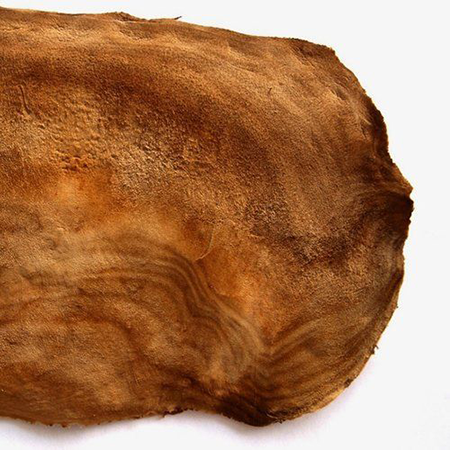
Alternative Craft and Traditional Material References

Critical Design Reflection
Reflecting on Week 1, hosting the live synthesis demonstration with Adi from MYCL provided an essential empirical baseline, while immediately exposing the hidden technical and ethical challenges behind commercial biopolymers. Experiencing the pervasive sulfur off-gassing and physical headaches in the studio proved that material safety and odor neutralization must be treated as primary design requirements rather than secondary afterthoughts.
Furthermore, auditing the baseline samples revealed three critical vulnerabilities: premature ambient degradation in Singapore's humidity, high thermal drying energy (24–31 kWh) and reliance on undisclosed commercial additives and synthetic dyes. Confronting these realities in Week 1 sets a clear, grounded direction for our semester: moving beyond superficial "green" claims to engineer a transparent, low-energy and chemically safe seaweed bio-elastomer from the ground up.
Material and Product Opportunities
- Reformulating for Structural Rigidity: Investigating natural cross-linkers and structural additives to transform the current elastomeric matrix into a rigid biopolymer suitable for hard product enclosures.
- Odour Neutralization and Sulfur Mitigation: Exploring bio-based additives or modified extraction parameters to bind sulfur compounds during processing, preventing post-curing off-gassing.
- Alternative Bio-based Formulations: Revisiting baseline biopolymer recipes from prior material studies (e.g., alginate and starch-based matrices) to benchmark performance against MYCL's current formula.
Key Takeaways and Learned Insights
- Uncontrolled Off-Gassing Hazard: Natural decomposition of red algae (Eucheuma cottonii) under trapped or anaerobic conditions releases hydrogen sulfide H2S gas, causing mild physical discomfort and highlighting the critical need for active odor management and continuous studio airflow during processing.
- Thermal Energy Footprint: Extended forced-air dehydration (48 hours at 1000–1100W) represents the primary carbon-intensive bottleneck in processing, challenging net-zero claims unless lower-energy or ambient curing methods are optimized.
- Additive Instability: Synthetic dyes and baseline chemical formulations exhibit premature color fading and spontaneous ambient degradation prior to soil burial, indicating chemical matrix instability in the baseline formula.
Strategic Action Plan
- Recipe and Additive Audit: Research natural cross-linkers, bio-fillers and alternative plasticizers that can increase matrix hardness without relying on toxic synthetic dyes.
- Dehydration Protocols: Test lower-energy curing alternatives (such as vacuum drying or ambient humidity control) to establish a baseline energy footprint for batch production.
- Literature Review: Compile material science literature and Life Cycle Assessment (LCA) frameworks regarding red algae (Eucheuma Cottonii) extraction and biopolymer stability.
- Iterative Testing Schedule: Define experimental recipe parameters for Week 2 to systematically adjust plasticizer ratios and monitor physical shrinkage, density and curing speed.