Post-Dehydration Specimen Audit and Process Review (Recipe Trials 17–18)
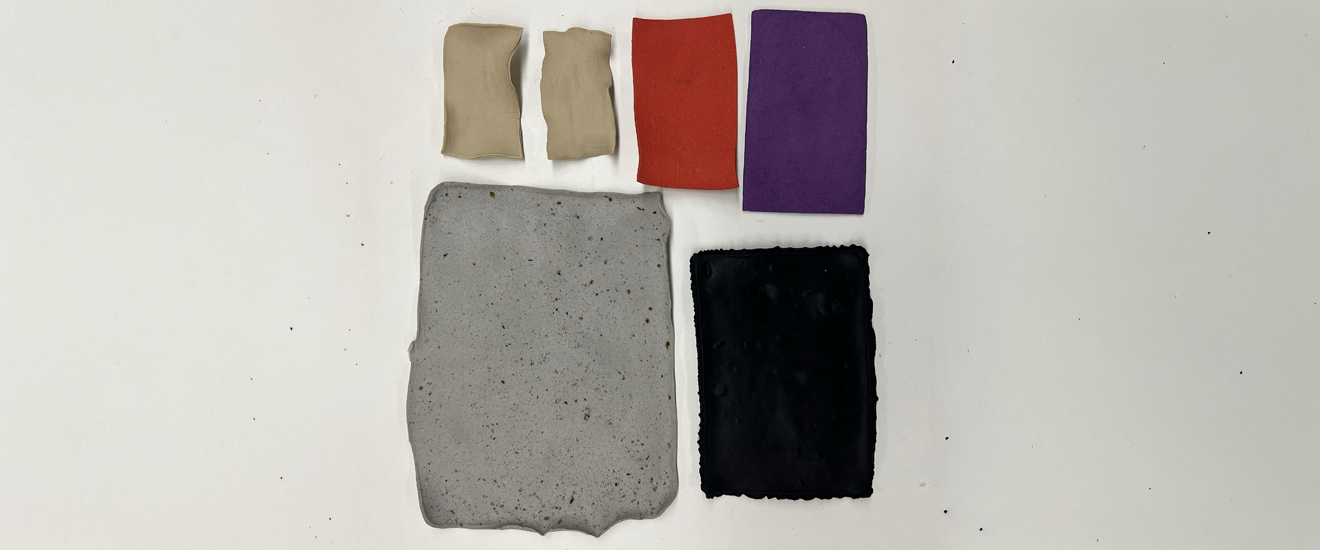
Evaluation of the previous week's experimental series (Recipe Trials 17 and 18) was conducted on November 2, focusing on circular scrap recycling stability, surface carbon transfer and mechanical flexibility under flexural stress.
[Day 1: Pre-Mix, Emulsify and CaCl2 Cross-Link] → [Day 1: 30-Min Rest and CaCl2 Mist Spray] → [Day 1: Mesh Inversion (1h40m) and Resume Drying (3h)] → [Day 1 22:00: Remove and Mesh Shelf-Rest] → [Multi-Day Phase: 4h Dehydrator Pulse @ 49°C + Intermittent Ambient Shelf Curing]
[9h Total Curing @ 49°C → Recipe Trial 17 (Marbled Recycled Scraps) → Flexible Sheet / Multi-Colored Aesthetic / Pristine Planar Flatness]
[9h Total Curing @ 49°C → Recipe Trial 18 (Fine Carbon Matrix) → Flexible / Surface Carbon Staining / Micro-Tear Stress Sensitivity]
Key Audit Observations
Recipe Trial 17 (Recycled Multi-Specimen Marbled Composite):
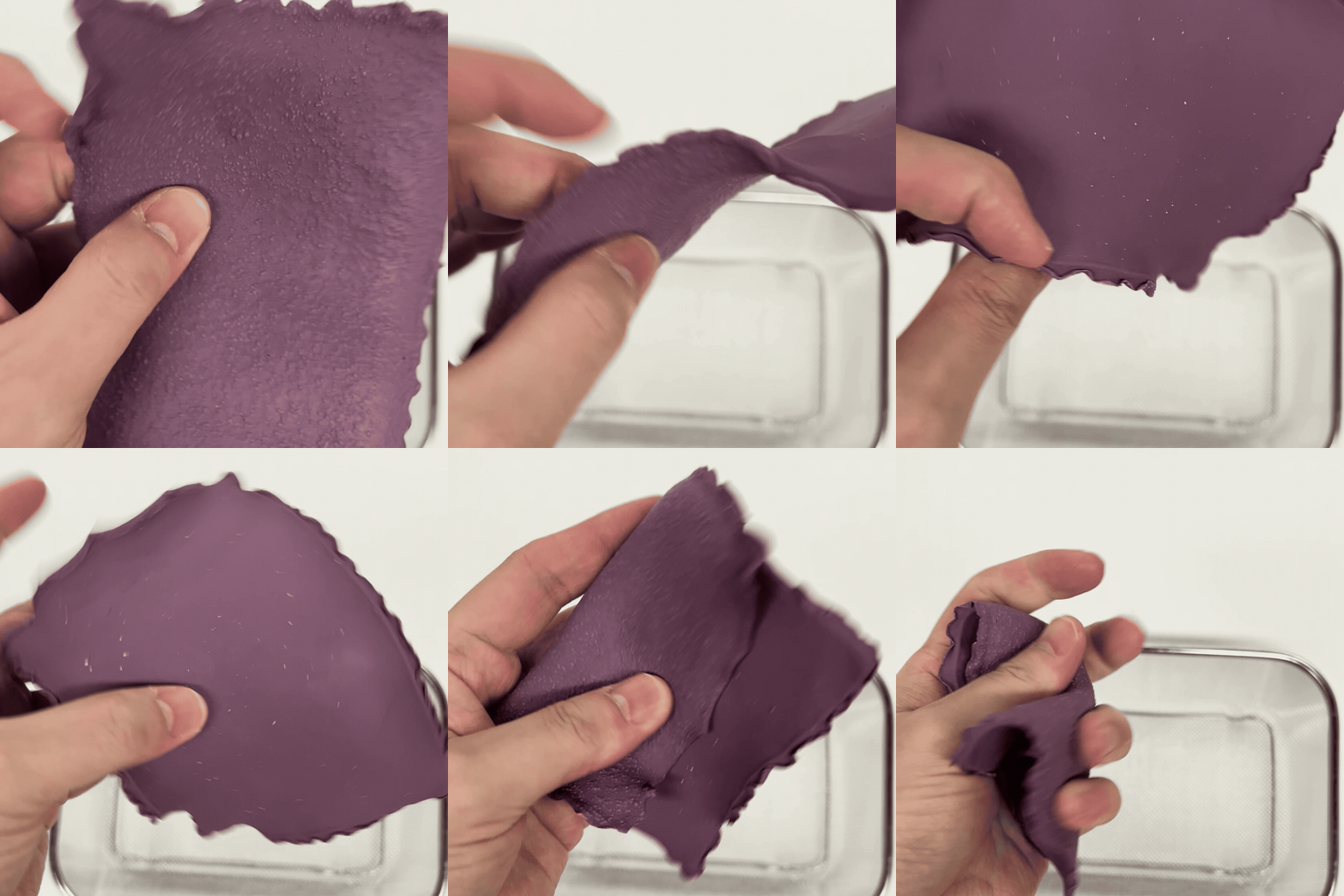
Visual and Tactile Surface: Cures into a vibrant, multi-colored marbled bioplastic sheet utilizing remelted scraps from Trials 14, 15 and 16.
Mechanical Performance: Exhibits high structural integrity and elastomeric flexibility. Folds and bends without perimeter tearing or localized stress fracturing.
Desiccation and Surface Flatness: Demonstrates excellent planar stability on the wire mesh tray with minimal edge curling post-inversion.
Recipe Trial 18 (Fine-Grade High-Density Carbon Conductive Sheet):
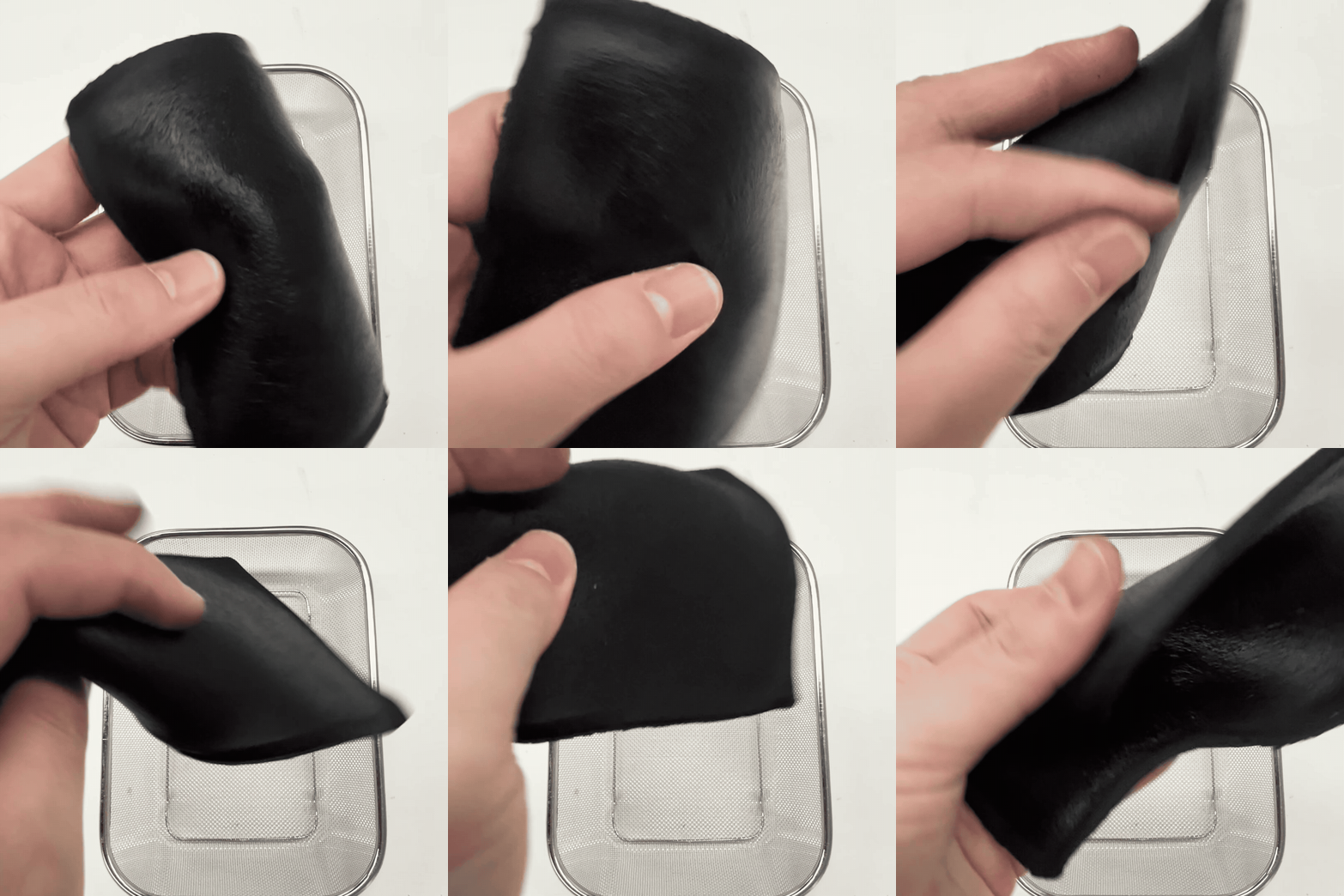
Visual and Tactile Surface: Cures into an ultra-smooth, matte-black flexible sheet.
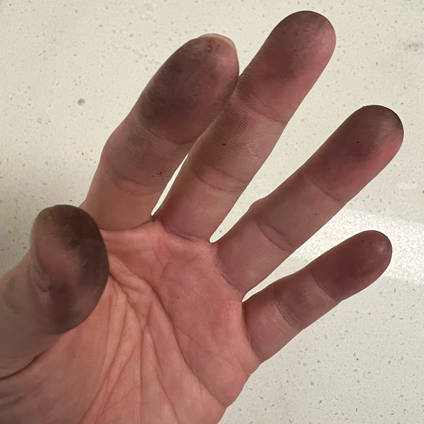
Tactile Residue and Shedding: Physical handling reveals significant unbonded charcoal transfer. Fine carbon dust rubs off easily onto fingers, indicating that the polysaccharide binder network failed to encapsulate the high solid loading completely.
Mechanical Performance: Highly flexible under gentle manipulation, but susceptible to brittle tearing and edge cracking under high tensile or flexural bending.
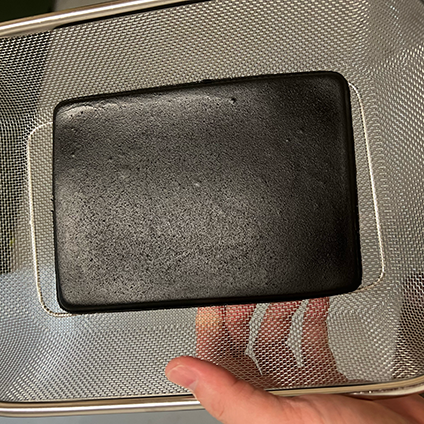
Desiccation State (9 Hours Total @ 49°C): Yields a non-tacky, matte surface with a cold hand-feel. Traps trace ambient moisture without feeling damp or leaving wet residue, confirming structural stability but requiring nanoscale reinforcement.
Technical Analysis: Carbon Shedding, Rheological Seizing, and Nanoscale Reinforcement
1. Surface Carbon Shedding and The Binder Enclosure Limit
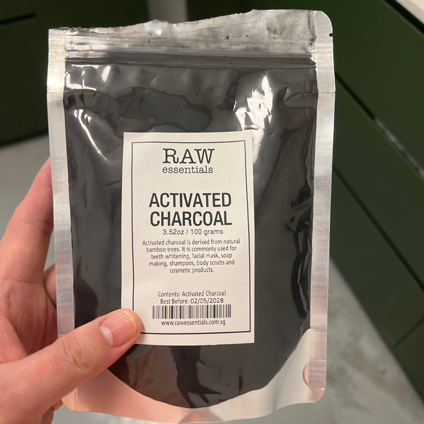
At a 1:1 ratio of activated charcoal to carrageenan binder (15g : 15g), the solid particulate volume exceeds the critical pigment volume concentration (CPVC). As moisture evaporates, the carrageenan matrix contracts, leaving un-encapsulated carbon granules exposed along the surface boundary, which stain hands upon contact.
2. Reinforcement Mechanism of Cellulose Nanocrystals
Integrating Cellulose Nanocrystals in suspended liquid/gel form introduces a high-aspect-ratio crystalline framework. The hydroxyl-rich nanostructures form tight inter-chain hydrogen bonds with carrageenan polymers and physical entanglements around carbon particles, locking charcoal inside the matrix, increasing tensile strength and stopping surface dusting.
3. Flash-Gelation Kinetics and Rheological Viscosity Hazards
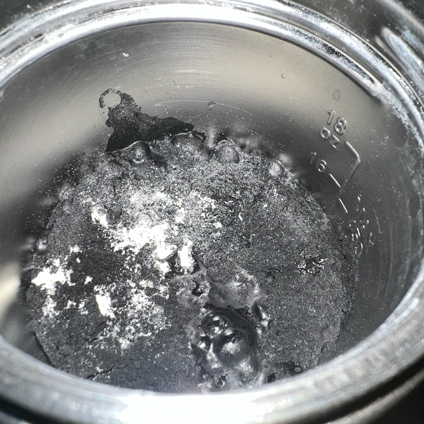
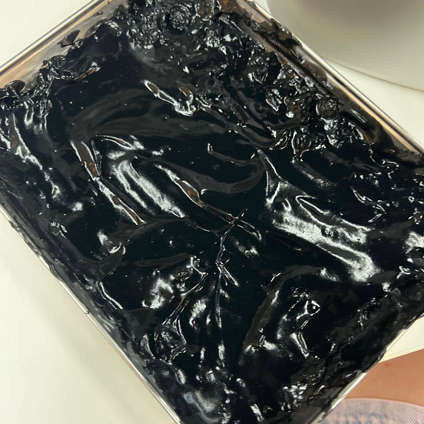
During Recipe Trials 19 and 20, incorporating Cellulose Nanocrystals alongside high solid loads triggered rapid thermal gelation. Upon cooling below 60°C, the carrageenan-nanocrystal mixture undergoes violent sol-to-gel phase transition, hardening into an unpourable, tar-like mass. Passing hot hydrocolloid mixtures through metal sieves accentuates this failure: conductive metal mesh acts as an instant heat sink, flash-freezing the gel and blocking fluid flow.
4. Blender Loading Sequence Mechanics
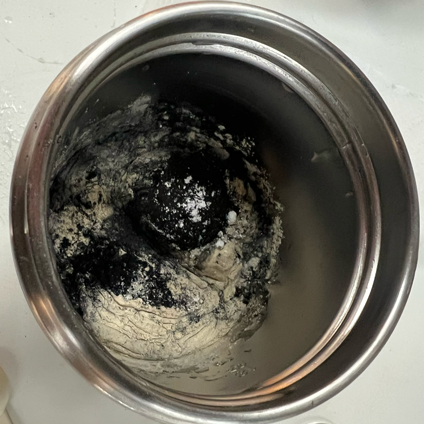
Adding dry carrageenan powder directly to the bottom of blender cups causes instant hydration skinning, the outer layer forms a water-impermeable gel barrier around dry interior powder, cake-sealing clumps against the blades. Stacking base liquids first and floating dry powders on top allows the blender vortex to pull powders downward evenly, achieving complete homogenization.
Contextual Research and Material Precedents
To establish a solid scientific and contextual framework for our biopolymer trials, literature and studio practices were reviewed regarding particle-binder dynamics and circular recycling models:
- Critical Pigment Volume Concentration (CPVC) Theory: In composite material formulation, CPVC represents the exact boundary where binder volume is just sufficient to completely coat all solid filler particles and fill the interstitial voids between them. Exceeding CPVC leaves un-encapsulated particulates exposed along the polymer surface boundary. This theoretical limit explains why Recipe Trial 18 (1:1 charcoal-to-carrageenan ratio) suffered from severe surface carbon transfer, as the particulate loading overloaded the carrageenan matrix upon desiccation contraction.
- Circular Scrap Recycling Models and Zero-Waste Design: Our scrap re-melting workflow in Recipe Trial 17 builds upon traditional circular paper-pulping and closed-loop bio-fabrication paradigms. By exploiting the reversible hydrogen bonding of carrageenan hydrocolloids, factory waste and off-cut swatches from prior trials (Trials 14, 15, and 16) can be thermalized and re-cast into functional marbled sheets without structural degradation or chemical additives.
- Nanoscale Crystalline Scaffolding: Research into bio-composite reinforcement demonstrates that adding high-aspect-ratio Cellulose Nanocrystals (CNCs) introduces tight hydrogen-bonded networks alongside physical particle entanglements. This nanoscale interlock provides the structural reinforcement necessary to lock fine particulate fillers inside polysaccharide bases, mitigating surface shedding while improving tensile flexural strength.
Visual Moodboard and Design Intent
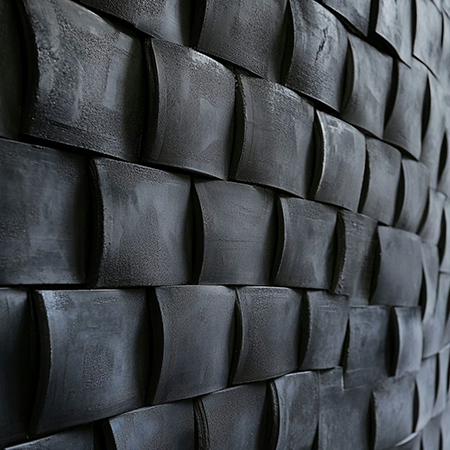
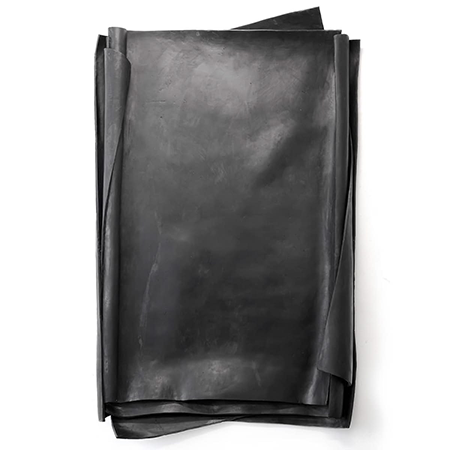
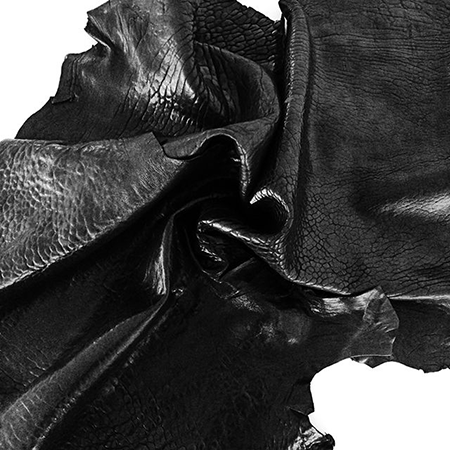
Alternative Craft and Traditional Material References
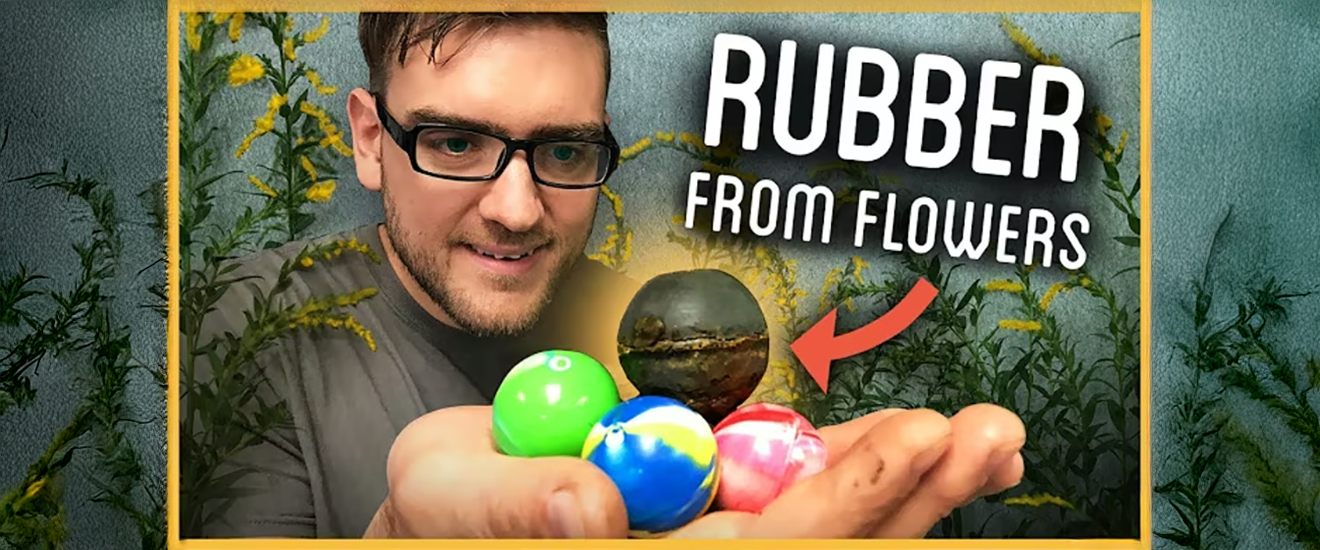
Critical Design Reflection
Reflecting on the experimental outcomes of Week 12, the transition from Trial 17's successful marbled scrap recycling to Trial 18's carbon shedding audit highlighted a crucial material trade-off between solid loading and binder encapsulation. While Trial 17 confirmed that our carrageenan base supports 100% circular re-melting with pristine planar flatness, Trial 18 exposed the mechanical and visual limits of high-density carbon filler loading.
The surface dusting encountered in Trial 18 served as a vital design diagnostic rather than a failure. It demonstrated that relying solely on macro-polysaccharide chains at a 1:1 filler ratio is insufficient for clean surface performance. This directly justified our pivot toward Cellulose Nanocrystal (CNC) integration and liquid-first vortex blending sequences in Trials 19 through 21. By addressing binder enclosure limits and rheological flow hazards early, we established the technical foundation required to engineer non-shedding, flexible bio-elastomer sheets ahead of our upcoming semester interim critique.
Refined Recipe Formulations (Recipe Trials 19–21)
[Base Liquids + Glycerol + CNC Pre-Blend (10s)] → [Float Powders (Carrageenan / Charcoal)] → [High-Shear Vortex Blend (15–20s)] → [Stovetop Emulsification (<80°C)] → [Pre-Warmed Tray Hot-Pour (<80°C)]
Recipe Trial 19: High-Solid Cellulose Nanocrystal Pilot Formula
Cast Date: 29 October 2026
- Formulation Parameters: Distilled Water (280 ml), Cellulose Nanocrystals (70 ml liquid suspension), Seaweed Powder (15 g), Fine Activated Charcoal (10 g — reduced from 15 g), Glycerol (12 ml), Zinc Oxide Powder (0.5 g), Calcium Chloride (0.3 g dissolved separately).
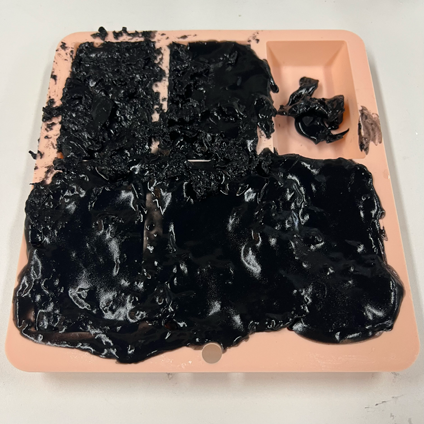
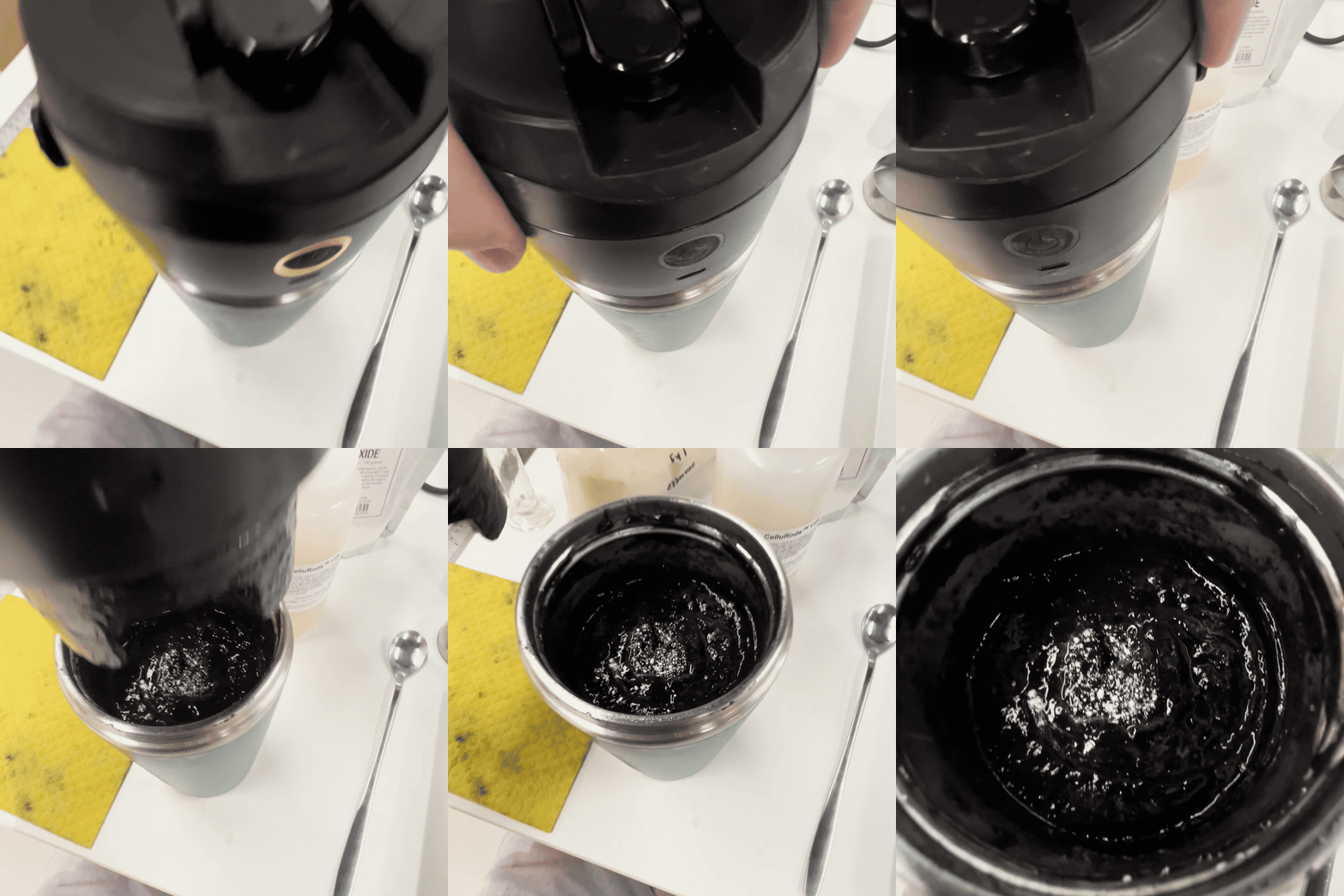
- Process Observations: Combined distilled water and Cellulose Nanocrystals before blending dry powders. During stovetop cooking, high solid loading (70 ml CNC + 15 g binder + 10 g carbon) caused rapid viscosity buildup. Upon pouring onto a room-temperature metal tray, thermal shock triggered instantaneous flash-gelation, converting the fluid into an unpourable, tar-like paste that failed to self-level.
- Casting and Microstructure: Poured directly onto a room-temperature silicone partition mold. High solid volume (70 ml Cellulose Nanocrystals + 15 g carrageenan + 10 g charcoal) combined with thermal shock from the cold silicone tray caused instantaneous flash-gelation. The fluid seized into a thick, rubbery paste before it could spread across mold cavities, producing a fragmented, highly uneven, tar-like mass. While the material hardened into a deep black solid, the lack of self-leveling created severe internal stress fractures and irregular surface thickness.
Recipe Trial 20: Volumetric Optimization and Thermal Management Trial
Cast Date: 30 October 2026
- Formulation Parameters: Distilled Water (385 ml), Cellulose Nanocrystals (15 ml / three 5 g scoops), Seaweed Powder (10 g), Fine Activated Charcoal (10 g), Glycerol (12 ml), Zinc Oxide Powder (0.5 g), Calcium Chloride (0.3 g dissolved separately).
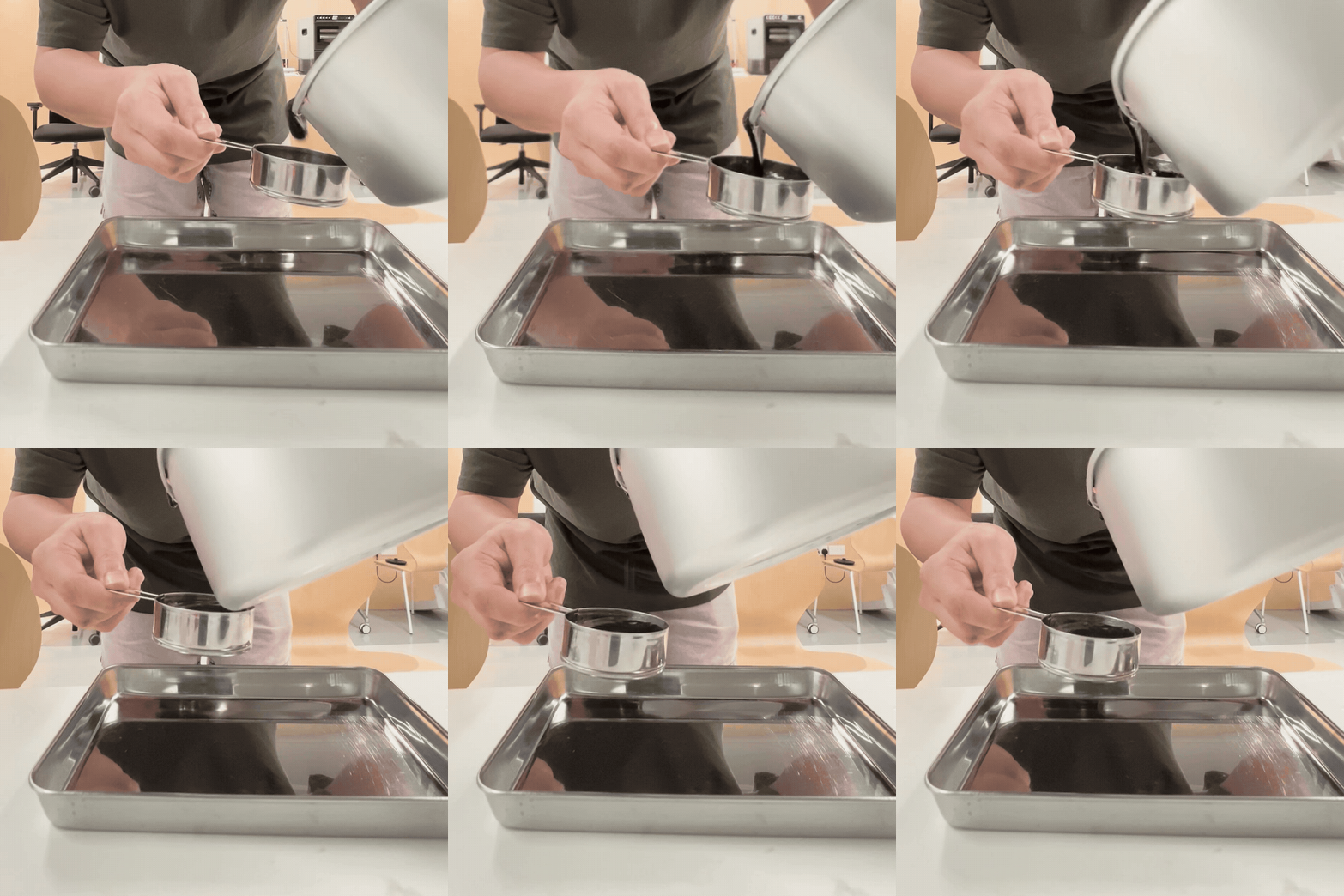
- Process Observations: Cold-blended in a NutriBullet and cooked on medium heat. Attempting to strain the hot mixture through a metal sieve caused immediate grid blockage as the hydrocolloid flash-gelled on contact with cold wire mesh. Scraping the lumpy mass onto trays resulted in an uneven surface texture, confirming that sieves must be permanently eliminated in favor of high-shear cold blending.
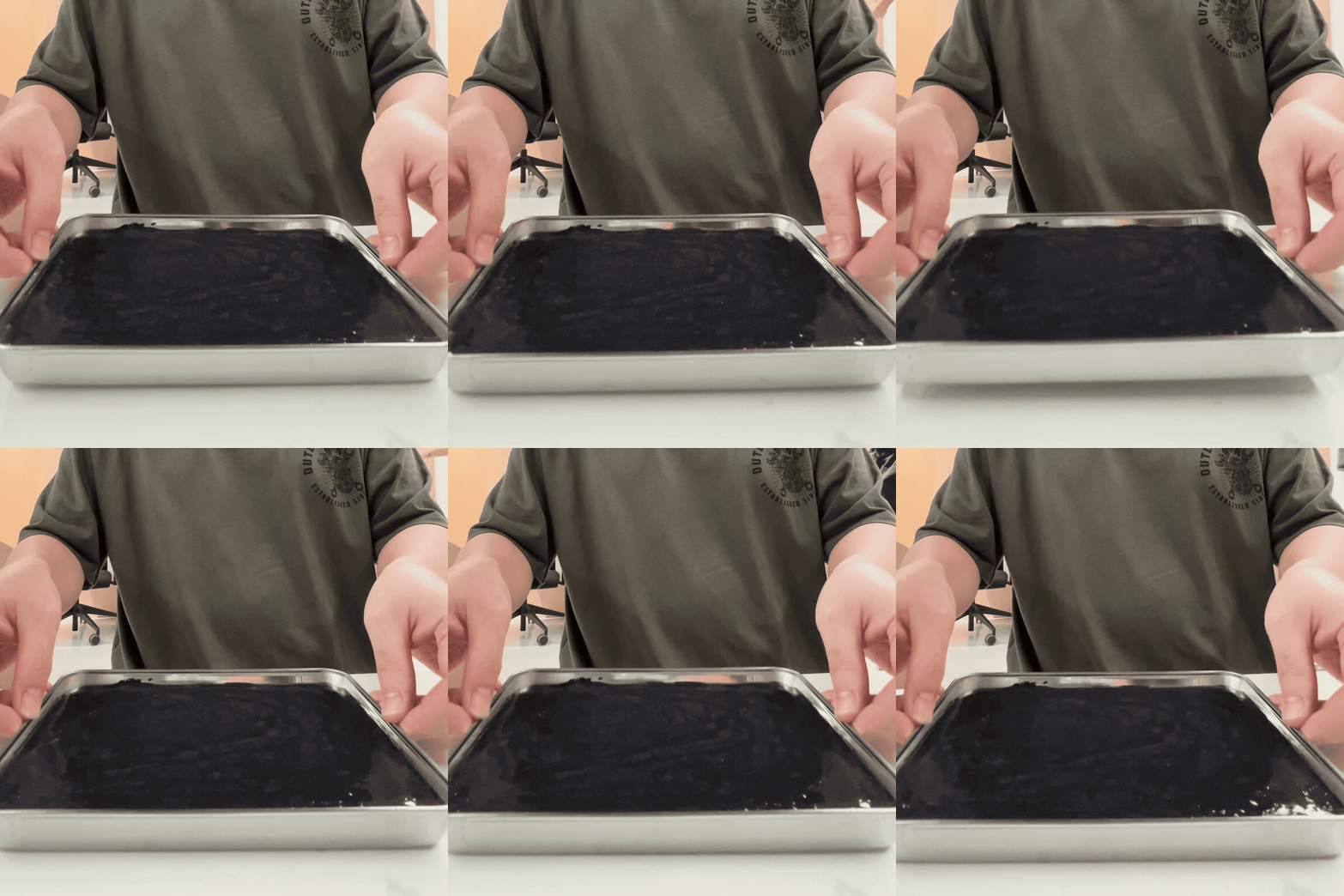
- Casting and Microstructure: Attempting to filter the hot mixture through a fine wire mesh sieve failed as the hydrocolloid flash-gelled on contact with the room-temperature metal grid, clogging the mesh. The remaining slurry was scraped onto the tray, resulting in a lumpy, non-uniform liquid layer. Following a 2-hour dehydrator pass, mesh inversion and a 24-hour ambient shelf-rest, the sheet cured into a thick, rigid black polymer. The top face retained prominent surface ridges, micro-crevices and perimeter warping caused by uneven initial flow, though surface carbon shedding was visibly reduced compared to Trial 18.
Recipe Trial 21: Master Conductive Sensor Sheet (Gravimetric CNC Formula)
Cast Date: 1 November 2026
- Formulation Parameters: Distilled Water (385 ml), Cellulose Nanocrystals (15 ml / three 5 g scoops), Seaweed Powder (16 g — accurate gravimetric mass), Fine Activated Charcoal (10 g), Glycerol (16 ml), Zinc Oxide Powder (0.5 g), Calcium Chloride (0.3 g dissolved separately).
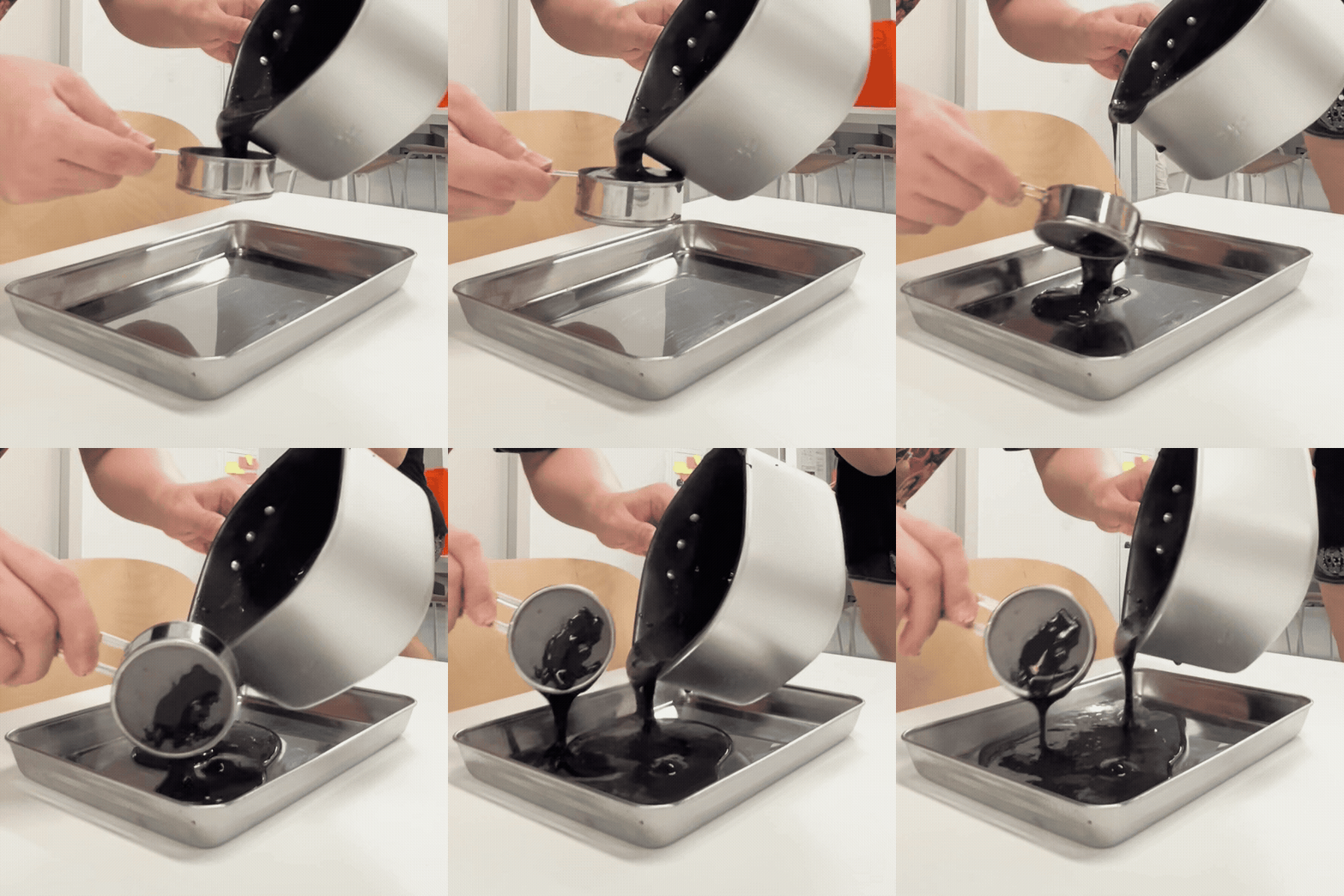
- Process Observations: Executed strict liquid-first stacking: water, glycerol, and Cellulose Nanocrystals were pre-blended for 10 seconds to shear white CNC agglomerates into a smooth milky base. Seaweed powder, charcoal, and zinc oxide were floated on top and blended for 15 seconds. Cooked under 80°C and poured directly from the active burner onto a pre-warmed silicone mat. The fluid self-leveled smoothly, was defoamed via 75% isopropyl alcohol mist, and set into an immaculate, non-shedding black matrix.
- Casting and Microstructure: Executed hot-pour casting directly from the active stove burner onto a pre-warmed, flat metal tray. The liquid flowed smoothly like hot syrup, self-leveling across the entire tray plane before gelation occurred. Surface tapping and 75% isopropyl alcohol misting instantly collapsed micro-bubbles, while a diluted CaCl2 spray established a smooth top boundary layer. After multi-stage dehydrator curing and ambient conditioning, the sheet peeled off easily as an ultra-smooth, planar, matte-black flexible film. The CNC-reinforced matrix completely bound the carbon particles, yielding zero finger-staining upon tactile handling while preserving structural elasticity and high tensile toughness.
Key Takeaways and Learned Insights
- Nanoscale Reinforcement and Residue Elimination: Integrating 15ml of Cellulose Nanocrystals alongside a reduced carbon ratio (10g charcoal to 16g carrageenan) locks fine carbon particles within the hydrocolloid network, eliminating surface staining while enhancing tensile flexibility.
- Elimination of Strainer Heat Sinks: Metal sieves act as thermal heat sinks that trigger instant hydrocolloid flash-gelation; high-shear blender pre-mixing completely replaces manual filtration.
- Fluid Thermal Management ("Hot-Pouring"): Maintaining the saucepan on low heat adjacent to pre-warmed casting trays prevents thermal shock gelation, allowing CNC-reinforced biopolymers to self-level into uniform, defect-free sheets.
- Vortex Blending Sequence: Loading base liquids first and floating dry powders on top prevents bottom caking and unhydrated gel pockets, ensuring a homogeneous pre-cure slurry.
Strategic Action Plan
- Multimeter Electrical Mapping (Recipe Trial 21): Conduct grid-based surface resistivity measurements (Ω / sq) across the cured Trial 21 sheet to benchmark conductive consistency post-CNC integration.
- Auxetic Laser-Cutting Optimization: Perform digital laser-cutting tests on Trial 21 using refined power/speed settings to evaluate slit-geometry expansion without edge tearing.
- Showcase Presentation Mounting: Trim standardized rectangular cutouts (85 mm x 55 mm) of Trials 17, 18 and 21 for mounting on exhibition display boards ahead of the November Design Lab Showcase.