Statement of Intent (SOI) Review and Mentorship Feedback
This week marked our first formal consultation reviewing the submitted Statement of Intent (SOI), specifically my concept of capturing seaweed biopolymer degradation via low-cost IoT sensors to trigger digital / AI workflows.
- The Reality Check: Mentor feedback highlighted that executing a fully functional, sensor-triggered closed-loop biopolymer system within the FYP timeframe presents significant technical hurdles. I was advised to establish a clear fail-safe / backup plan to ensure academic delivery if the material-to-digital interface encounters dead ends.
- Craft and Process Insights: The most valuable takeaway from this session came from the mentors sharing their years of industrial practice and craft background. They encouraged me not to view this strictly as a digital / hardware problem but to approach the project through the lens of material crafting, physical behavior and experimental patience.
- Pivoting Mindset: Looking back at my initial Week 1 notes, my perception of what this project can and should become has shifted drastically. The past three weeks of research and ideation have provided much-needed processing time.
Activity: Paper Crafting & Tactile Exploration
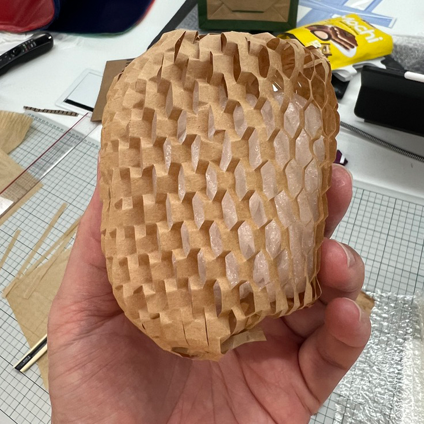
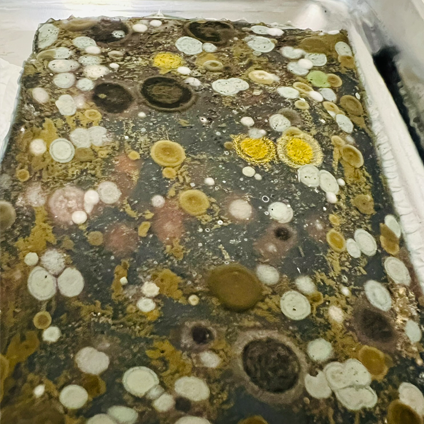
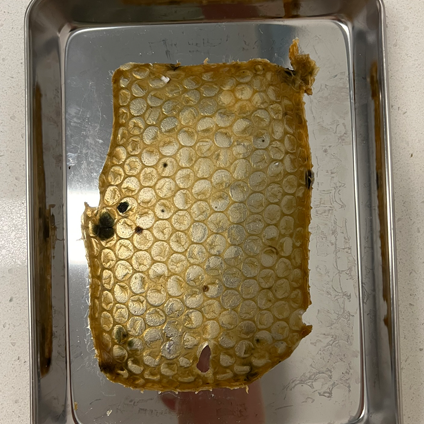
For the paper crafting review, I presented a series of tactile surface manipulations, culminating in a mixed-media exploration inspired by marine life and jellyfish structures.
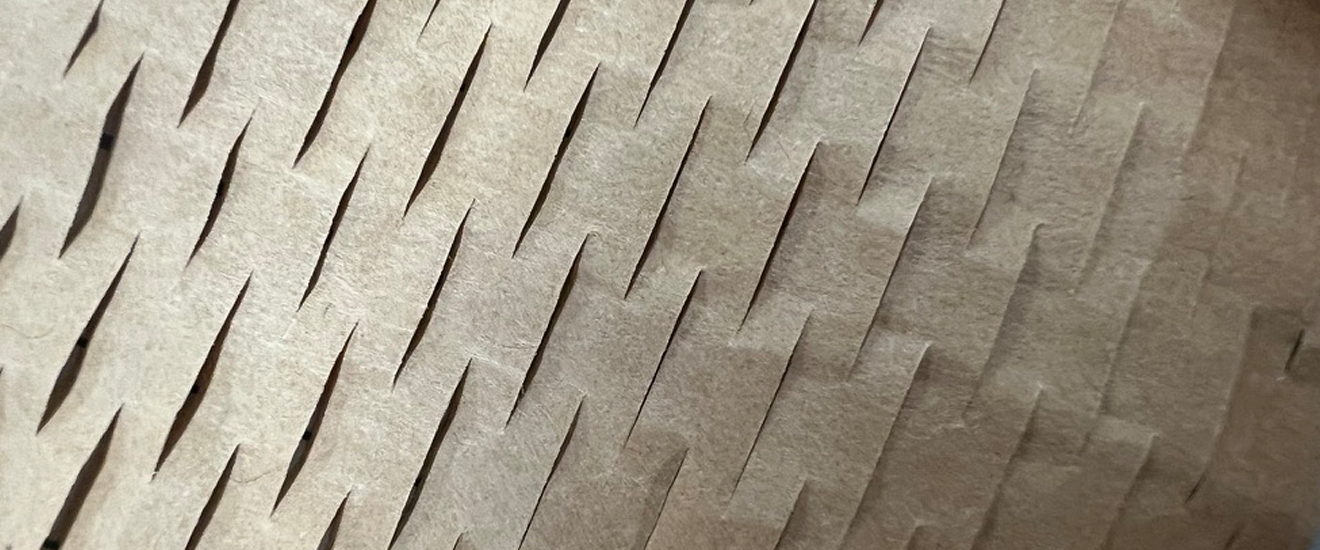
- Successes and Insights: Using a paper mesh wrap over bubble wrap, with emerging cellophane tendrils, created dynamic light filtration, visual depth and organic tactile movement. Fine surface slitting in other paper samples also demonstrated how flat substrates can achieve stretchability and auxetic behavior, offering potential avenues for flexible packaging.
- Limitations and Material Friction: Because physical seaweed curing and synthesis have not yet begun, our assumptions about paper behavior remain purely theoretical. Paper’s grain and memory will perform differently compared to an organic seaweed matrix, which could cure anywhere on the spectrum from brittle to elastomeric.
Critical Enquiries
- Reframing Degradation: Instead of treating a short shelf-life as a design flaw, how can degradation be harnessed as an active functional feature or visual indicator?
- The Intelligence Layer: How can hardware, IoT sensors and AI automated workflows interface with a living / degrading material to create a net-positive environmental feedback loop?
- Safety and Off-Gassing: As organic biopolymers degrade, chemical off-gassing and structural shifts occur. Rather than ignoring these material science challenges, how can we safely isolate or repurpose these chemical reactions (e.g., using micro-moisture shifts for passive household indicators)?
Material Opportunities
-
Concept Domain
Active Environmental Indicators
-
Key Mechanism / Hypothesis
Moisture & Chemical State Sensing
-
Systemic & Technical Rationale
Utilizing the material's
sensitivity to humidity
to create ambient home
diagnostic tools (e.g.,
disposable dehumidifier
indicators or passive
moisture monitors).
-
Concept Domain
Chemiluminescent Biopolymers
-
Key Mechanism / Hypothesis
Bioluminescent / Peroxide Activation
-
Systemic & Technical Rationale
Inspired by chemical light
sticks, exploring whether
incorporating oxidative
agents (e.g., hydrogen
peroxide) can yield a
self-illuminating seaweed
polymer for short-use safety
or ceremonial applications.
-
Concept Domain
Automated AI Workflows
-
Key Mechanism / Hypothesis
Off-Gas / Decay Triggering
-
Systemic & Technical Rationale
Formulating soluble or dual-purpose
bio-matrices that dissolve entirely during
use, leaving zero structural waste.
-
Concept Domain
Tactile & Structural Packages
-
Key Mechanism / Hypothesis
Mesh, Tendrils & Auxetic Cutouts
-
Systemic & Technical Rationale
Translating the jellyfish-inspired
mixed-media techniques (mesh
grids, flexible tendrils, surface cuts)
into structural bio-packaging that
stretches and adapts to contents.
Contextual Research and Material Precedents
To ground our methodological pivot and mixed-media paper explorations within contemporary sustainable design theory and polymer ethics, research was conducted into greenwashing psychology, material transparency, and structural biomimicry:
- Moral Licensing and The Fallacy of Superficial Bio-Branding: Behavioral economics research demonstrates that eco-labels and "biodegradable" claims often trigger moral licensing, lowering consumers' perceived ethical guilt and encouraging higher single-use consumption and careless disposal. True sustainable design requires moving beyond superficial material swaps toward Extended Producer Responsibility (EPR) and long-lifecycle product utility.
- Chemical Transparency and Supply Chain Ethics: Auditing the proprietary additives from the initial MYCL demonstration revealed a critical sustainability blind spot: relying on undisclosed chemical powders and repeated cross-border imports undermines genuine circularity. Transitioning to fully disclosed, locally sourceable ingredients, centered on Javanese Eucheuma cottonii carrageenan, ensures complete lifecycle accountability and non-ecotoxic breakdown in heat and water.
- Material Agnosticism and Auxetic Paper Mechanics: Early structural explorations utilizing hand-cut paper meshes, slitting, and layered translucent substrates demonstrate how planar sheets can achieve stretchability, light filtration, and mechanical deformation. These physical paper-crafting studies provide essential geometric benchmarks before committing raw seaweed hydrocolloids to structural casting.
Visual Moodboard and Design Intent
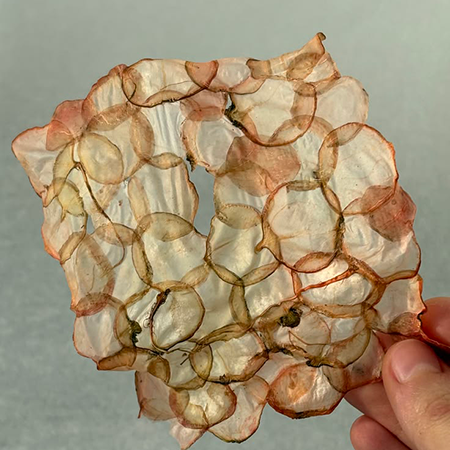
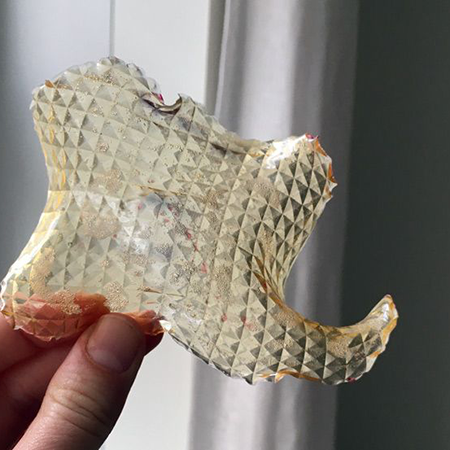
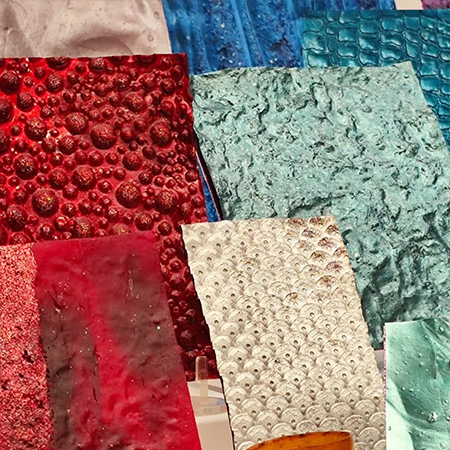
Alternative Craft and Traditional Material References
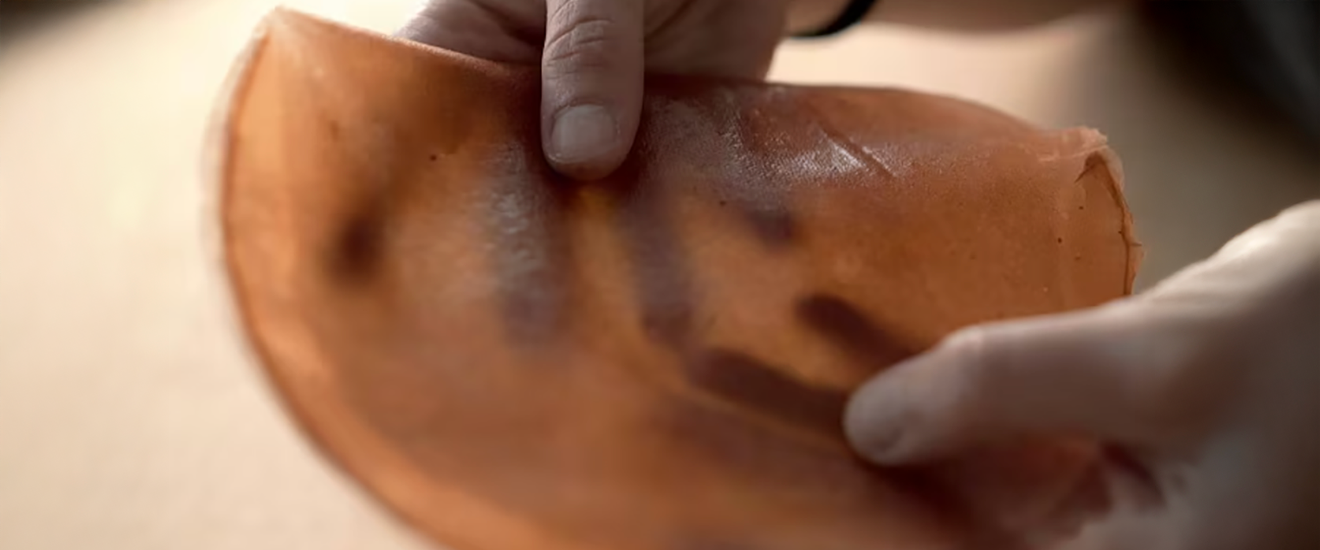
Critical Design Reflection
Reflecting on Week 3, this consultation served as a decisive turning point that reshaped both our Statement of Intent (SOI) and our core research methodology. Mentor feedback rightly challenged the feasibility and focus of building a complex IoT sensor and AI-triggered decay pipeline within our timeframe, urging us instead to approach the project through patient material crafting and physical behavior.
Simultaneously, confronting the lack of chemical transparency in the baseline demonstration formula forced an essential ethical pivot. Rather than relying on undisclosed commercial additives, we committed to developing an independent, 100% transparent recipe library built on Javanese carrageenan and safe, ethical ingredients that break down cleanly in heat and water. Letting go of premature hardware complexity to focus on tactile material craft, auxetic paper-slitting prototypes, and honest bio-elastomer formulation aligns our studio practice directly with the core thesis of moving Beyond Petrol Synthetics.
Key Takeaways and Learned Insights
- Material Agnosticism in Circular Design: Decoupling design intent from a single bio-material matrix allows for freer exploration of circular systems, combining physical paper-crafting, textile manipulation and structural experimentation without premature material constraints.
- Tactile Exploration and Pattern Manipulation: Physical paper-crafting techniques, such as scoring, slitting and three-dimensional folding, directly inform how bio-based sheets can achieve structural rigidity, stretchability and flexibility without modifying chemical formulations.
- Strategic Intent vs. Material Properties: Aligning material opportunities (optical clarity, tensile stretch, composite density) with user-centred requirements ensures that bio-polymers are developed with strategic industrial purpose rather than speculative novelty.
Strategic Action Plan
- Backup Plan / Alternative Pathways: Outline a clear fail-safe scenario in the SOI framework (e.g., focusing on purely physical/craft applications if IoT sensor integration encounters dead ends).
- Extended Mixed-Media Crafting: Continue experimenting with physical paper manipulations, exploring how mesh, slitting and layered translucent materials can inform eventual mold-making for biopolymers.
- Degradation and Sensor Auditing: Establish baseline empirical testing protocols for mass loss, moisture sensitivity and off-gassing behavior across transparent seaweed formulations.
- Closed-Loop Mapping: Diagram the end-to-end ecosystem, mapping how raw Javanese seaweed, ethical local ingredients, product usage and thermal/water breakdown connect in a closed-loop lifecycle.